Constructing A Sentence

This past weekend, in Montgomery, AL I stood in the Legacy Museum and the National Memorial for Peace and Justice surrounded by the weight of history—our history. I saw the names, the chains, the terror written into law, the bodies strung from trees like strange fruit, the incarceration statistics. I felt the gravity of centuries of pain, and yet, what shook me just as deeply was not only what was behind us—but what is still wrapped tight around us.

Complicity – the quiet acceptance of injustice. Ignorance is not the act of not knowing, but the passive choice of ignoring. The refusal to confront truth. Consider the audacity of a system that still forces Black and Brown children to learn and thrive under the names of those who fought to keep their ancestors enslaved, and their descendants who don’t realize they lost (or did they?). I speak from a space of knowing, having once taught at Lee High School in Huntsville, Alabama. I walked those halls, labored in the classrooms, and looked into the eyes of those students—brilliant, gifted, filled with promise—and I asked myself the same question I ask today: How can they truly learn and be whole under the banner of their oppressor? Would the Jewish people require their children to attend a school named after Adolf Hitler? Would Germany even allow a school to be named after him? Would America ask Japanese American students to pledge allegiance in a school named after the architects of their internment? I would think not. Because we recognize that names carry weight. Names shape perception. Names have power.

Yet across Alabama, across the South, we still expect our children to sit in classrooms, to dream, to rise—while the very walls around them whisper, Know your place.This isn’t history. This is now. Schools named after Robert E. Lee, J.E.B. Stuart, and others weren’t built in the 1800s. No, they were erected in the heart of the 20th century, long after the Civil War, as a direct response to the Civil Rights Movement. These names were chosen with intention. They were planted like landmines, meant to remind us that while laws may change, power does not surrender easily. J.E.B. Stuart high school in Virginia has been renamed Justice High School. Lee High School, in what its said to be the most progressive city in Alabama, has survived every move to get the name changed. Perchance the mindset of those who put it in place is alive and well. The wish to hold the name and what it stands for seems more desirable than the true intent to move beyond. With that, I quote the words of Dr. Martin King, Jr. in his Letter From A Birmingham Jail, “Injustice anywhere is a threat to justice everywhere.

Some will always say, “It’s just a name.” But the truth is, names have always been tools of control. That’s why enslaved people had their names erased. That’s why schools, streets, and institutions were named to honor those who upheld white mental impoverishment (I do not use the term white supremacy on purpose as there is nothing supreme about it) . That’s why the fight to reclaim names, to rename spaces, is a battle for dignity and a strong nod toward justice. It is not enough to say we have moved past the inglorious past when it still creeps among us, etched in bronze, carved into stone, stitched onto letterman jackets, and typed on diplomas. A better nation is not one that simply acknowledges wrongs—it is one that corrects them. It’s past time for change. Rename the schools. Reposition the monuments to treason. Confront the truth, not for comfort, but for justice. Anything we are seeing in today’s climate – and we are seeing it, is a direct result of seeds planted…and nourished. If we are to truly move forward exemplifying an honorable legacy, we must cease laboring under the weight of those who chained us to the past.

Casting Shadows

The other day, while walking across a field, staring into the setting sun, squinting my eyes by default, I allowed the waning light to wash over me. Finally, for a bit of relief I looked away to the opposite side and saw something just as magnificent -my elongated shadow bathed in the glow, stretched much taller than I appear to stand.

Light reveals, defines, and elevates, but it also does something we sometimes overlooked—it casts shadows. Shadows stretch, expand, and shift with the movement of their source, yet they are only made possible by the presence of light. How often do we stop to appreciate how powerful that light truly is? In life, we can get sidetracked by the obstacles—the heavy, looming shadows—that we fail to recognize the brilliance creating them. We mistake the shadow as a sign of obstruction, rather than evidence of the light that fuels our journey. We forget that shadows are elongated echoes of our own presence, reminders that we are standing in something radiant enough to leave a mark beyond ourselves.

The lights in our lives—the passion we pursue, the relationships that uplift us, the convictions that propel us forward—are forces that illuminate our path and give dimension to our existence. Yet, it is easy to dismiss these lights because they do not always appear as grand, blinding beacons. Sometimes they are quiet glows, subtle flickers, or even the warm embers of something still struggling to catch on. But they are there, shaping everything we touch, deepening the impact of our charge, and stretching our influence beyond what we can immediately see.

As artists, as visionaries, as creators, as citizens in a world in need of what awe have to offer, we must embrace both the light and the shadows it casts. We must recognize that our art, our voice, and our presence do not exist in isolation. They extend, they shift, they leave impressions in places we may never step foot. The shadow cast by a single candle can reach across a vast room, just as a single act of courage can inspire beyond our home, city, country, or lifetime..

So today, I invite you stand in your light. Recognize the power in your present and your presence. Claim the shadows too. Allow them to serve as proof that you are moving, growing, and charging forward with purpose. Because where there is a shadow, there is light—yours, ours, and the collective brilliance of those among and beyond us who dare to shine.

The High Cost of Hidden Inventory

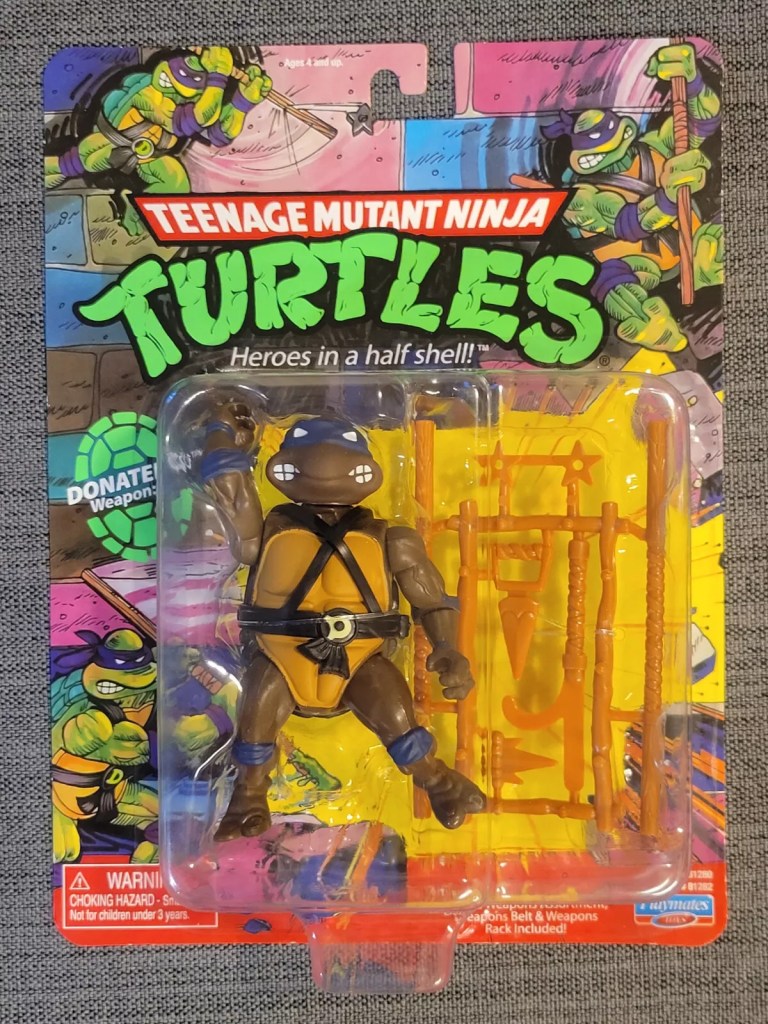
Years ago while still a college student, I worked at Toys R Us. Every so often we would have to do inventory. This allowed us to see how much stock we had on hand, how much we had to sell, and what was needed to continue to do business with the public. One particular season, Teenage Mutant Ninja Turtles were all the craze. I remember climbing high in the the rows of TMNTs to find that precise turtle a customer was looking for. Yes, we had a boatload of them. At some point however, we found ourselves short on Donatellos, one of the turtles. Then there were no Donatellos at all. Even still I would climb the turtle wall and pour through the turtles just for customer satisfaction. For weeks we turned away customer after customer looking for Donatello. One particular day, I was in the stockroom making some space and noticed a couple of large boxes turned on their sides. I boosted myself onto the shelf and pulled the boxes forward. Popping them open with my trusty boxcutter, I found gold. Or rather I found what we had been needing- Donatellos. Somehow during inventory, someone had failed to see the boxes. For weeks Toys R Us had been losing money on what we already had because no one recognized we had them.

Recognition, like taking inventory, is a way of taking stock. It has a way of offering us a moment of pause, a rare opportunity to reflect on what we have and the journey we’ve traveled. A couple of weeks ago, I had the privilege of being honored by two organizations at a local ceremony. As the announcer read through my accolades, I found myself momentarily detached, almost as if I were hearing about someone else. For a brief moment, I had to glance at the screen and remind myself that they were speaking about me.

It wasn’t until later that I truly internalized the significance of that moment. How often do we take inventory of our accomplishments, truly measuring the depth of our impact and the level we have attained? It is easy to get caught in the constant momentum of striving for more without ever assessing the full weight of what we have already achieved. Yet, taking inventory of our journey allows us to recalibrate our valuation of both our efforts and our worth in the marketplace.

This realization brought back a powerful statement that a coach shared with me last year. In response to my dismissiveness about my achievements, he said, “Normalizing greatness creates undervalued experiences.” At the time I thought it was deep but still didn’t grasp the power of the words. I refused to take inventory. I was still too focused on the next thing. When innovation and excellence becomes our standard, we sometimes fail to recognize it as such. What was once an extraordinary feat becomes routine, and in that normalization, we diminish the very experiences that once held immense value. Also, we have to consider how our upbringing plays into this thing of humility. Perhaps we grew up in a family or environment where bragging or claiming credit was seen as a negative. To counteract this we go full tilt in the opposite direction. In actuality it may not be humility at all but simply undervaluing ourselves by default.

This is a double-edged sword. On one hand, setting a high bar for ourselves drives continuous growth and improvement. On the other, failing to acknowledge and appreciate our own milestones can lead to an undervaluation of our contributions. If we don’t recognize our own greatness, how can we expect others to?

Thus, it is crucial to practice intentional reflection. Take moments to acknowledge how far we’ve come, celebrate the impact we’ve made, and recognize the value we bring to the table. Understanding our worth is not about arrogance—it is about alignment. It is about ensuring that our internal perception matches the reality of your contributions.

I invite you to take inventory sometime soon. Don’t hold back. Don’t let them feel foreign. Own them. Let them serve as a testament to the work you’ve put in and the lives you’ve touched. Because when you truly value yourself, the world will follow suit.

The Earth Never Forgets

Late last year I had the honor of attending an Equal Justice Initiative and Community Remembrance Project posthumous memorial service and marker dedication for one Robert Mosley. In 1890 Robert Mosley was dragged away from life in Meridianville, Alabama, hung by an enraged mob of over 450 men. This southern son’s light was snuffed out in broad daylight. This act of homegrown terrorism was carried out not by the courts, but by self-appointed executioners, fueled by fear-based hatred and the presumption of guilt. Robert Mosley’s age was somewhere between 16 and 19. Basically a child.

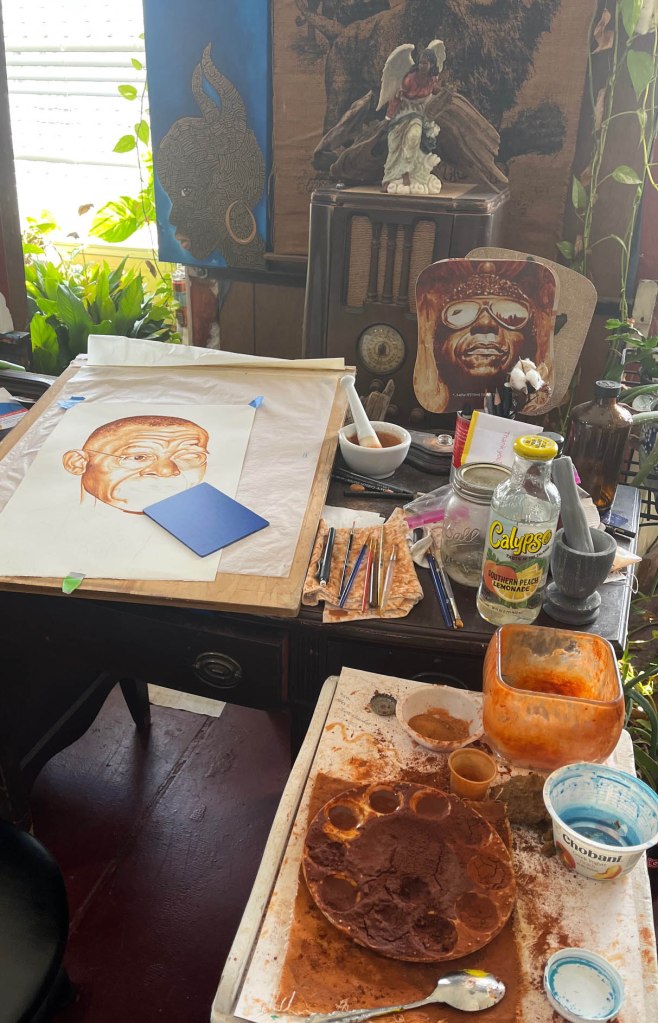
I had the challenge and honor of doing a portrait of Mr Mosley in red clay which I gathered from the area of his murder. Working with red clay gives me the feeling of working with a living substance. It is, as a professor once told me, “rich with the blood of y(our) ancestors.” The red clay that forms this image is not merely pigment. It is a reminder of the blood shed on this southern landscape for what we now call home. This painting calls us to bear witness—not just to the life of Robert Moseley, but to the countless others whose names have been forgotten in the ashes of social violence.

During the ceremony, the photographer approached me about the portrait and his camera’s interaction with the eyes. He explained to me the sensitivity of his AI powered camera – how it could detect human eyes. He went on to say that it was reading the eyes of the portrait as human. I heard him but didn’t think anything of it. Several times more in passing he would comment on it, in obvious awe. Finally at the end of the ceremony when he was taking a photo of another gentleman and myself next to the piece, he came over shaking his head and said, “You’ve got to see this!” he proceeded to tell us that the camera had actually recognized the portrait’s eyes before it had ours. In the camera, I saw the green dots focused in on the eyes of the portrait of Robert Mosley. If I’d had another mindset, it could have come across as eerie. Obviously, to him it was rather fantastical and somewhat unbelievable.

At home that evening, I found myself looking through the photos of the program online. The words on the posterior of the marker read.

With his last words, Robert reportedly objected to the mob’s covering his face with a handkerchief, pleaded, “Let me see one more time in this world.”

As I read those words, a chill ran through me. Let me see one more time in this world. And here was this portrait—his likeness, his spirit—being recognized by an artificial eye meant only for the living. The thought settled deep in my chest. Had I, in some way, created a portal for his sight? Had the clay, the very earth itself, become a vessel for something beyond my understanding?

Sitting in the dim glow of my screen, I stared at the image—still seeing in my mind’s eye the green dots locked onto his eyes. It’s as if the camera, too, was acknowledging his presence. Maybe it was just technology behaving strangely. Or maybe, just maybe, Robert Mosley finally got the chance to see in this world one more time. After all, it is A.R.T. …A Resurrecting Truth.

If Not…For The Birds

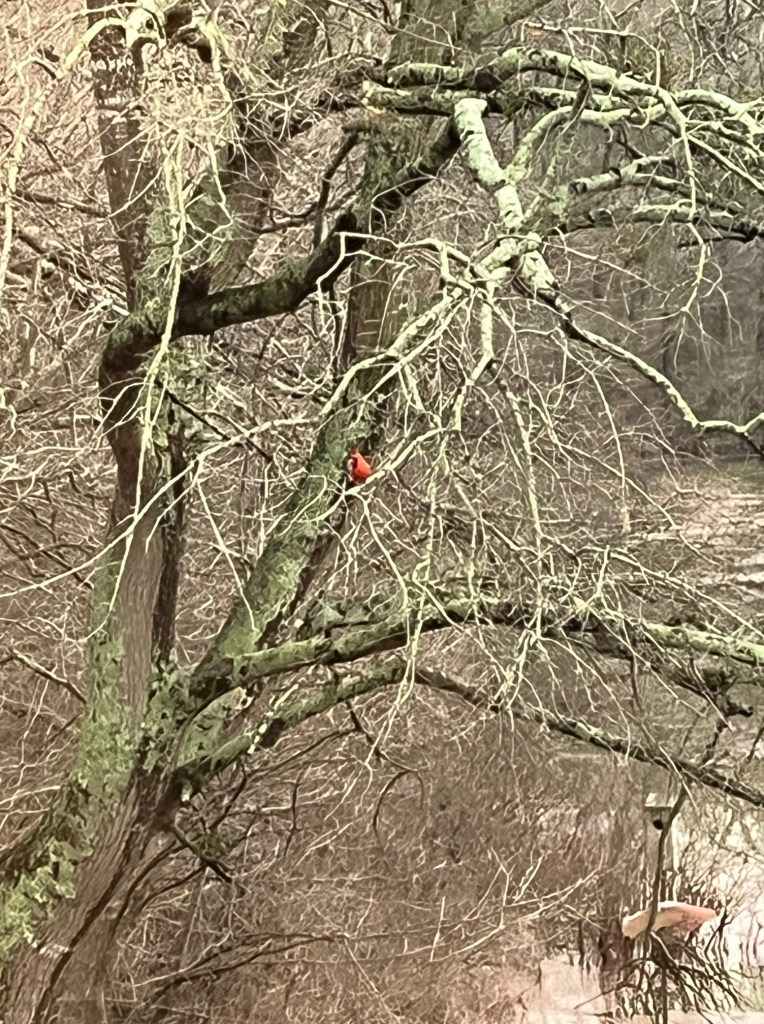
This year, I had the privilege of attending the renowned Festival of Cranes—a celebration of grace, migration, and one of natural world’s many intricate dances. While the elegant sandhill cranes captivated the crowds, my own attention was pulled away by an unexpected guest: a back a forth game of male cardinals darting through the naked wintry limbs, the red plumage striking against the bare landscape. This simple encounter took me on a journey of reflection, one centered on hope, intention, and the messages we receive if we pause to notice.

As a child, whenever we spotted a cardinal, we’d shout, “Redbird, somebody comin’!” It was part superstition, part playful belief that the bright flash of red was a herald of change, a sign that someone—or something—was on its way. Back then, we didn’t think much of it beyond the joy of the moment. But as I stood there watching the cardinal at the Festival of Cranes, I felt the significance of that childhood exclamation in a new way.

Cardinals have long been seen as symbols of hope and renewal. Their brilliant crimson feathers stand out unapologetically, even in the bleakest seasons, reminding us to embrace our individuality and worth. They seem to carry messages from beyond—a gentle nudge to reconnect with faith, spiritual practices, and the peace that comes from being present. In their quiet grace, they offer a sense of life’s continuity, a whisper that even in hardship, beauty endures.

That day, watching the cardinal, I felt these lessons deeply. It wasn’t just a moment to observe but a call to participate—to take the hope the cardinal symbolized and turn it into intention. Hope, when passive, is like a seed left unplanted. To elevate it into intention means to act on it, to let it shape how we move through the world. The cardinal’s red plumage wasn’t just a signal to stop and notice; it was a challenge to lean into that moment of reflection and ask, “What next?”

I carry the memory of the cardinal with me, its image etched into my mind as a vivid reminder to live with intention. The cranes taught me about harmony and connection, travel and poise while the cardinal urged me to take those lessons and weave them into my daily life. Hope, I realized, is not just something to feel—it is something to live…on purpose.

The next time you see a cardinal (or anything that pulls your attention away from the order of the day), pause. Breathe. Let its message remind you of hope, not as a passive lottery style wish but as an invitation to act, to engage. Take that hope, plant it, and nurture it into something that can grow and sustain you—and perhaps others. After all, “somebody” is always coming. Maybe it’s you.

Embracing The Journey

Last week, a snowstorm blanketed the East Coast, transforming familiar landscapes into frosty white humps. At the same time, we bore witness to newsreels of wild fires raging in California. The entire picture is a stark reminder of our divided literal and metaphorical climates. It’s hard not to see the symbolism: two extremes, mirroring the polarization of our times.

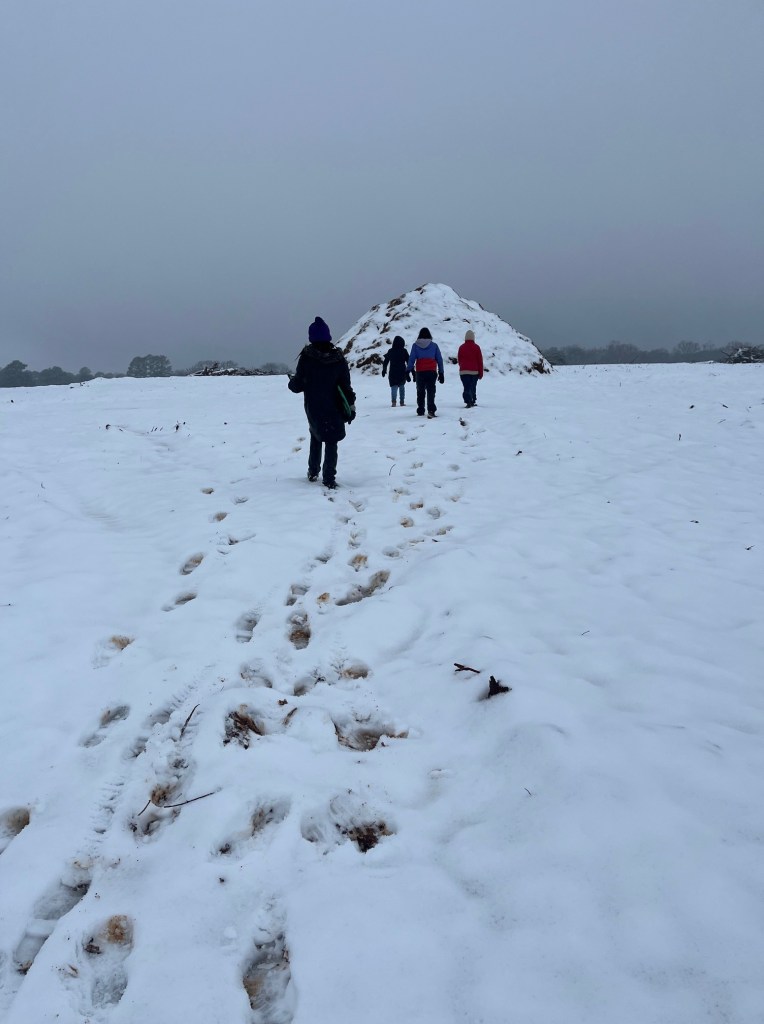
In the aftermath of the storm, we decided to embrace the weather and hit the great outdoors. We had actually been hoping for snow. When we get it in my neck of the woods, it’s generally in celebration. The air was crisp, and the fresh snow muffled the world around us. This offered a rare stillness around our voices of laughter as we sculpted snow creatures then armed ourselves with snowmunition and went to war. The day was escaping so we called a truce and took off hiking. As the group trudged ahead, I hung back taking in the scene: the path we carved through the snow, my family in motion, and the destination up ahead. It struck me then how much this mirrored life itself. Yes, I do think a lot, even at times like this. So often, we fixate on where we’re going—the summit, the goal, the resolution—that we forget to savor where we are in the moment. Each step becomes a task rather than a part of the experience. And yet, those steps are where the magic happens. The crunch of snow underfoot, the shimmer of sunlight breaking through snow-heavy branches, and the sound of my youngest daughter’s voice asking how much longer—these moments are the journey.

And then there are the tracks we leave behind. Looking at the trail behind them, I thought about the impression we make for others who watch us, who come after us. Our choices, our actions, and even our mistakes make paths that guide, hinder, or inspire those who follow. The clarity of a single set of tracks through fresh snow can be reassuring, a beacon for others to navigate unknown terrain. This perspective feels especially relevant in our current world, where extremes—both in weather and in society—seem to dominate. Fires and storms, division and connection. In such times, our steps and our awareness of them matter more than ever. The way we walk—with care, intention, and respect—can influence not only our journey but the paths and way we forge for others.

So as we move forward, let’s challenge ourselves to make the most of where we are. Make the most of today. Pause to admire the view, acknowledge the effort it takes to keep moving, and be mindful of the impact we leave in our wake. Whether we’re navigating snow or fire, literal or figurative, we really do have the power to shape the journey—for ourselves and for those who follow. With due diligence the destination will come soon enough. But it’s the trail we carve and the tracks we leave that tell the real story. The map will be here long after we’ve gone where we went.

Pathway Back To Purpose

In spite of the dark kickoff of the new year, let us herald the coming of a golden dawn, a brighter day, a call to shine again. This morning, as I sat with my family, I asked a question that sparked some thoughtful silence: “How many of you remember what it felt like to be a child? What did you do that brought genuine satisfaction and fulfillment?” The responses revealed a common thread of wistful nostalgia, with those of us whose brain was back online recalling moments of joy, creativity, or wonder, yet recognizing how far we’ve drifted from those feelings. Except for my 11 year old. She’s still in it. I encouraged the rest of us to take a walk down memory lane today, to engage in an imaginary conversation with our younger selves, and to ask what points or dreams still linger. This reflective exercise highlights how distractions, assumptions, people-pleasing, and avoiding hard truths often pull us away from our authentic paths.

As children, we’re naturally in tune with our core selves, unburdened by societal expectations. But as we grow, external pressures mount. We become distracted by the constant noise of the digital age, adopt rigid assumptions about what success should look like, and fall into the trap of prioritizing others’ expectations over our own needs. Often, we’re too afraid to confront the truths about our desires, fears, or limitations, which only leads us further from fulfillment. 

Reconnecting with your stellar soul (inner child) isn’t just nostalgic; it’s a powerful way to realign with your sense of purpose. Start by visualizing yourself as a child and asking: “What made you happy? What did you love doing?” Reflect on those memories and consider reintroducing those activities into your life. Writing down your thoughts in a journal can provide clarity, helping you identify what aligns with your values and what feels out of sync. This self-awareness makes it easier to set boundaries, to say no to draining commitments, and prioritize what truly matters.

Curiosity, playfulness and experimentation are keys to this process. Give yourself permission to try new things without the pressure of perfection. Revisit hobbies or interests you’ve abandoned and let creativity flow freely. Sharing this journey with supportive loved ones or a like-minded community can provide encouragement and accountability. Life is dynamic, so periodically reassess your path by asking your stellar soul if you’re still on track.

The journey back to your authentic self demands honesty and courage. It involves shedding distractions, weighty societal expectations, and the need to please others. Above all, it requires speaking your truth, even when it’s uncomfortable. By reconnecting with your stellar soul, you can reignite the spark that once guided you effortlessly and reclaim the satisfaction and fulfillment you thought was lost. Take that walk down memory lane—you are waiting to guide you home.

Alien Nation: Existing Among Them or Living As One

There is an ongoing debate regarding the presence of life on Mars and/or other planets. 1996, scientists announced that they found evidence of ancient life on Mars in the meteorite ALH 84001, which was collected in Antarctica. We hear of these findings and relegate them as background noise to the sound track of our lives. We simple don’t believe or won’t because of how we have been instructed to believe. What if there are “99 other unfallen worlds”? What if we are not really living our own lives? What if we are living this life on someone else’s terms? What if we are just falling into line based on patterns set by algorithms and social conditioning? The aptly crowned father of Afrofuturism, musician and philosopher Sun Ra, also from Alabama, spoke of being from another planet, of visiting other worlds. Many if not most of us would dismiss this idea or ideal as ridiculous or delusional at best. Take note that Sun Ra’s drummer, Marshall Allen is still touring…at 100 years old as of May 25, 2024.

In one of the X-Men movies, Aurora and Jean are having a hard time accepting what Kurt is telling them about himself. He responds with these paradigm shifting words, “Most people will only believe what they see with their own two eyes.” How limiting that is. This leaves no room for faith or knowing outside of the box. Often when people dare to veer outside the box, they are alienated. Few things are taken into mainstream belief until accepted and coopted by the status quo. So most people shuffle through life in quiet desperation sipping on the tea of forgetfulness sweetened with a heaping spoonful of groupthink.

The other day I wrestled with this subject and the alien nature of it all. I know where my feet have trod and my mind has traveled. It’s been a journey I tell you. How many others must also experience the same revelations only to shut them down by the voices of reason encroaching from the outside. All the way home, the ideas of martians, aliens or whatever else might be out there, here with us or be us, orbited my mind. A short while after arriving home, I received a call from my first born daughter asking me to go outside and look to the sky (she lives around the corner). I did, and there loomed a luminescent starry light. First, I went through every logical explanation on what it could be. It sat beneath the heavy cloud bank and never moved. It was not a plane or satellite. I finally came inside, knowing what the title of this blog would be. The idea of alienation is inseparable from the idea of living life on our own terms.

What if being alien wasn’t about being apart, but being apart from fear? What if we chose courage over comfort, purpose over approval? What if we chose to live on our own terms breaking free from the quiet desperation of fitting into lives designed by others. Instead of surviving on what’s “dished out,” we take the raw ingredients of our existence—flawed, messy, miraculous—and create something true and relevant.

The bottom line is that we are all aliens here—strangers to each other, to ourselves, and to the dreams we’ve been handed like unwanted but accepted old hand-me-downs . Personal alienation feels as vast and cold as outer space, where the rules of survival aren’t written for us or by us but imposed by someone else’s limited idea of life space. Are we willing to go where no man has gone before?

Imagine no longer waiting for permission to dream your dream, to love, to thrive in your own rhythm. Imagine a life where alienation isn’t exile but liberation, where we reclaim our space and write our narrative among the stars, rather than shrinking into the dark corners of someone else’s dream…or nightmare.

To live fully, boldly, is to embrace the alien within—odd, radiant, and untethered. Life isn’t meant to be spent in the shadow of someone else’s vision. It’s meant to be lived, fully and unapologetically, in the brilliance of our own light. On this planet, where the dishes are often unpalatable and shaped by others, let us become the master chef of our own feasts, the architects of our own worlds. I’ve caught long glimpses and I know they exist…

Would you dare to be alien enough to live your dream?

A Timely Investment

As an artist, my life revolves around the creation of beauty and meaning. I pour a part of me into each stroke of my brushes, mark of my pen or pencil, and every conceptual decision. Art is timeless. But ironically, the pursuit of creation can sometimes make me lose sight of something even more precious than creativity: the value of time itself.

Time, unlike money, is a finite resource. No matter how much money we earn or what we achieve, we cannot stretch the hours in a day or rewind the clock to recapture moments we’ve missed. As a family man this reality hits close to home. Especially when my daughter walks across the room and I see that she’s a foot taller than she was two days prior. Sometimes she will ask whether I have to go to work that day. Of course my answer is always yes. But will I really remember that I missed that day off work just to hang out with her? While I strive to honor deadlines and push boundaries in my practice, I’ve had to confront the moments when my family and friends—the people who ground me most—felt sidelined by my work.

The truth is, you can always create more wealth in terms of dollars. A new commission, an additional workshop, or even a clever pivot to monetize your creative skills can generate the flow. But no amount of money can bring back any of my children’s first laugh or bike ride, an easy like Sunday morning with loved ones, or the quiet joy of simply being present for the people who matter most.

As an artist, my work is rooted in storytelling and legacy—in capturing essential moments that transcend time. But if I neglect the life around me, I’m failing to honor the very inspiration behind my work – my why. Art imitates life, and life is richest when we’re fully present in it. Yes, that may be a challenge to do but it is doable.

I’m still learning and yearning to embrace a feasible balance. That balance may never be evenly distributed. Some days, it may mean saying no to a project that doesn’t align with my core values or stepping away from my studio at a reasonable hour… to stay later another evening. Other days, it’s finding ways to integrate my family into my creative process, allowing my daughter to paint alongside me or sharing my vision with loved ones. These moments remind me why I do what I do in the first place.

For anyone struggling in the balancing of work and family, particularly in creative fields where the demands can be unpredictable, I encourage you to reflect on what truly drives you. Our success is not solely defined by accolades or financial milestones. It’s about the quality of your relationships, the memories you build, and the integrity you bring to your life and work. Really, time is the most valuable currency. Let’s invest it equitable with those who inspire us and for the moments that matter most.

Generating Light

Some time ago, I traveled to see a Thornton Dial art exhibit. Although Thornton Dial has transitioned, his work lives on as a beacon of his presence here on the planet. As a fellow Alabama artist, I am inspired by his journey. Included on the panel discussion was Lonnie Holley, another southern artist I deeply admire. It’s very important for me and my practice to seek out those whose work/life have shaped my creative journey and pushed my vision forward. As I stepped up in line and began to speak with Lonnie, I noticed another young man waiting eagerly. Lonnie continued on and conversed with me longer than any of the others before. Having been in the position of one who has stood in the space of waiting and of greeting, I wanted to be respectful of both positions.

Not wanting to take up much more than my share of his time, I decided to step back and give the waiting young man his turn. He stepped up directly to me still smiling. With an animated look of controlled excitement on his face he said, reaching out his hand, “I was waiting to to meet you.” I was a bit surprised to say the least. It felt like time paused for a moment. I had come to seek wisdom and inspiration from someone I looked up to, only to be reminded that I too, am a light for someone else.

The moment revealed to me an ever present truth: we are all torches in someone’s darkness, a lamp in another’s searching, or simple a light along their pathway. While we are busy seeking illumination to guide our own path, we are generating light that illuminates the paths of others. It’s humbling to think about the ripple effect of our actions. Every brushstroke, every step forward or back, every story we tell holds the potential to inspire someone we may never meet. Whether you’re an artist, a teacher, a parent, or simply a person striving to grow, your journey is leaving trails of light for others to follow.

I believe this is what creativity and ultimately humanity are about—connection. We are a collective constellation, each star adding brilliance to the night sky. The world doesn’t just need one blazing sun; it needs the combined glow of every light bearer sharing their radiance. Keep shining, I say. Keep creating. Keep living authentically or at least pushing toward it. You never know who might be waiting to meet you, or who might already be watching and drawing strength from your light. We are all part of this dynamic, magnanimous, cosmic exchange of inspiration. When we create and share, we generate light—not just for ourselves, but for a world so in need of it.