
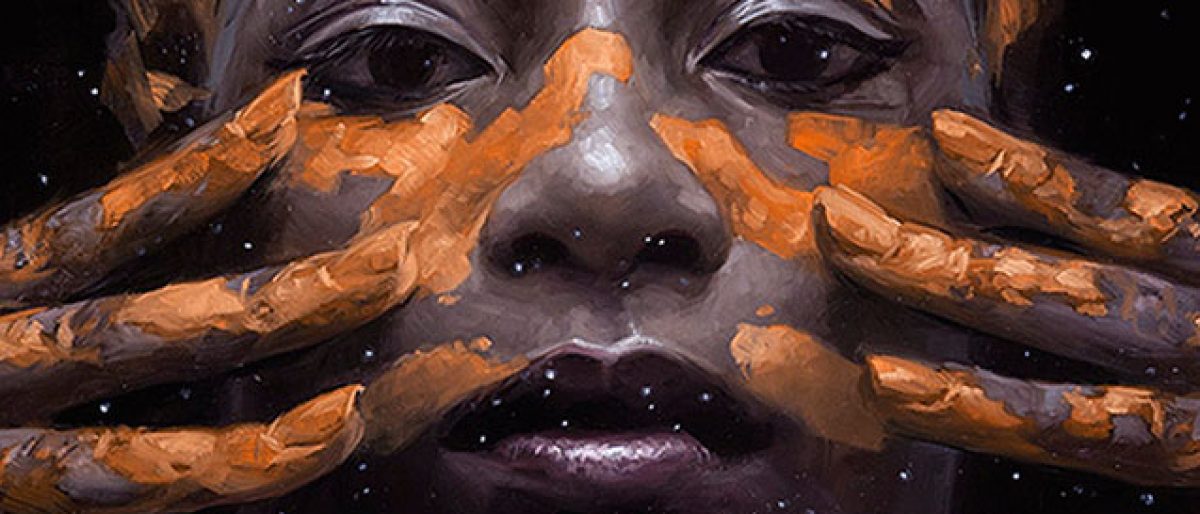
“We’ve all, at some point, walked past monuments built by others, honoring others. Why do we wait for someone else to honor our stories? What happens when we realize we are the monuments, the living, breathing proof of endurance, imagination, and grace? Our buildings aren’t just brick mortar, and glass. Our art is never just paint on a surface. They are evidence of belief and resolve that refused to fade. It’s the kind of creation that reminds us our presence is the monument, our work the foundation, and our progress the pedestal upon which our future stands.“
Some Wise Dude
About a year or ago I got a call from a fella, telling me he needed a mural done on the FX Market on Pulaski Pike. Now, mind you, I used to get a lot of spam calls like that. So much so that I was advised to remove my phone number from my contact information. The gentleman on the other end was Vincent E Ford, serial entrepreneur working on a plethora of projects. He said he’d tried to reach me two years prior. We set a meeting and went from there. At our first meeting, I felt I knew him from somewhere. He tuned in to the familiarity, so we started climbing the family tree. We did have some people in common but only by marriage. I came to know that he had a construction company, a flagging company, some housing developments, an event center in the works, and one other FX Market gas station before the one upon which he wanted the mural painted. For some reason, it didn’t take long for us to begin bantering like we were old friends.
When he came through on the mural and shared his why, I felt better about the project. The subject matter was The Buffalo Soldiers, the U S 10th Cavalry Regiment that had camped on a hill near the FX Market site in the late 1800s because they were not allowed to stay with the white soldiers. At first the idea of painting this on a gas station didn’t thrill me. After some consideration. I came to realize it was the best place. Besides, I’d already activated the land long before I knew who was doing something with it when I had exhumed red clay from the site. This was people’s art and all types of people patronize gas stations. It wasn’t just about painting on a gas station, it’s creating legacy in so many ways. And this isn’t just a gas station; it’s a monument honoring monuments.
In the 1960s, according to local historians, there were at least four Black owned gas stations in the Huntsville/Madison County area. Currently, according to one study there are only four in the entire state of Alabama. Two are here in Huntsville/Madison County and Vincent Ford is the proprietor of them both. He had an idea, dreamed it up, and brought it to pass. At the end of the day, we all need gasoline, right. The first one he built is on family land in Harvest. The other one (with the Buffalo Soldier mural) sits on Pulaski Pike across the street from Northwoods Public Housing Community where he grew up, and the namesake Historic Space after the Buffalo Soldiers, Cavalry Hill. It stands as a testament to belief beyond borders, and attitude determining altitude. What started as a request for paint on a wall between us became something bigger, a mirror held up to what’s possible when vision meets purpose. His gas stations aren’t just a business; they are a declaration that our stories belong in full color, on our own walls, in our own neighborhoods. A gentleman stopped and inquired about the FX Market gas station one day. He had heard it was Black owned. I affirmed. He smiled as he pulled off and said on repeat, “We comin’ up.” I felt his sense of pride and resolve echoed in the declaration. So if you’re reading this and haven’t gone by. Do so if for no one else but yourself. This is an investment in us. When we see what we can do, it gives us the inspiration to continue to do.
This is what happens when belief outlives circumstance. When we stop aiming for the idea of Black excellence and start setting the reality of a Black standard, where ownership, craftsmanship, and community care are the norm, not the exception. When we build, we build for generations to come. When we create, we create capacity. And when we pour into our own, the return is legacy. That mural isn’t just about art in public space. It’s about arrival. A reminder that we don’t just dream beyond our address, we redefine it.


 Notes of A Native Son