
A month or so ago, I left a couple of pairs of shoes outside my studio. They were still in good condition butI knew I didn’t really need them anymore. I’ve cultivated the habit of passing along items I don’t use much—things I think might benefit someone else more—whether it’s clothing, shoes, or other belongings that could have a more useful life. I refer to it as blessing someone else with it. So, I marked the shoes “Free to You” and set them out for anyone who might need them.
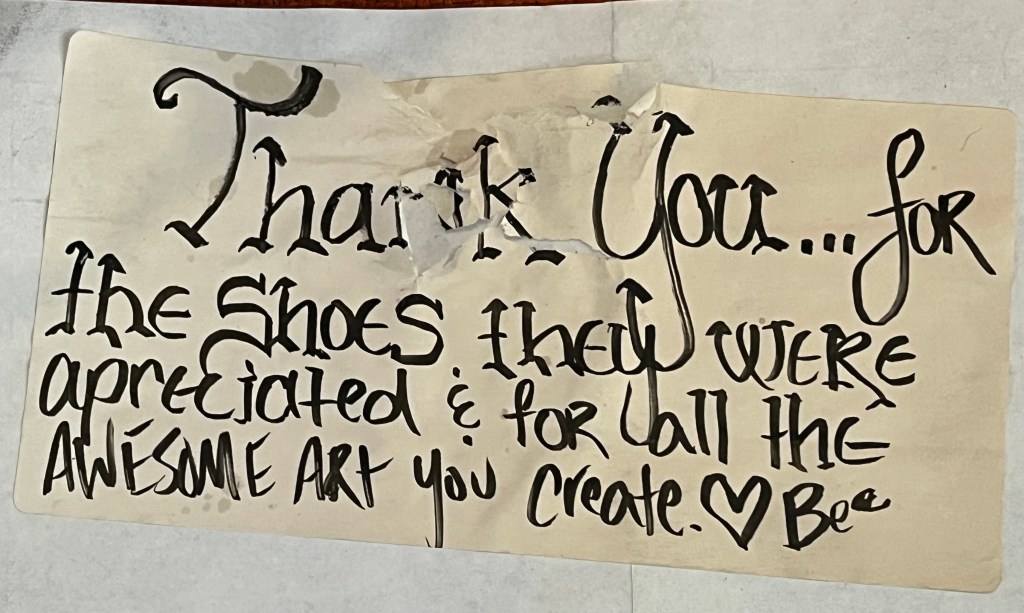
The next day there was a note on my door. It was short, but it carried with it a weight of gratitude and recognition that gripped my heart. It was a reminder of the deeper impact we can have on others, often in ways we don’t even anticipate. And I must mention, it was beautifully written.
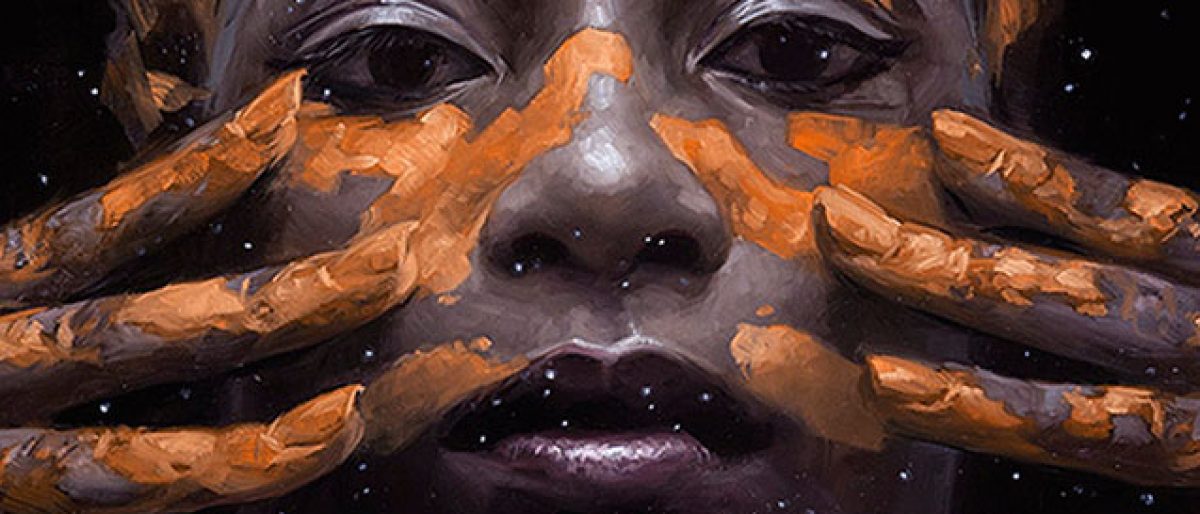
Truly, I was moved by the thank you the shoes. That they were needed, and that the person who received them was grateful. But what hit me even harder was the second part: the recognition of and gratitude for my art . I have no idea where they may have seen my work – on the news, in a magazine, or a local mural. Either way, it had touched them. In the midst of what appears to be a struggle—of living without a home—this person could still see the value of what I create. In their own way they were affirming that my work matters, that it reaches beyond just an audience of people who walk through my studio doors, gather in suits and dresses in hallowed halls, and touches unexpected lives in unexpected ways. In that moment, I was reminded of the unique power of art. We often talk about art as something that reflects society or speaks to our times, but I also know art has the ability to transform us, to bridge divides and transcend barriers. To speak to the human condition, in whatever form it may take.
For this person, my art practice is not a distant or abstract concept. It wasn’t just something I put on a canvas or created in my studio. My art was seen, appreciated, and connected to an act of kindness—a simple gesture of sharing something as basic as shoes. They had, in turn, extended a gesture of kindness back, not just in thanking me, but in acknowledging the value of what I do as an artist. This experience has made me think a lot about how we can all intentionally contribute to the world, in big and small ways. Whether it’s through a work of art, a service rendered, a loaf or bread baked or bought, a pair of shoes, or a kind word, we all have the power to make a difference. And sometimes, it’s the smallest gestures that have the most profound impact.
We live in a world where it can often feel overwhelming to think about how we can truly make impact. But it takes every stroke to make the masterpiece. If you have things you no longer need or use consistently, consider blessing someone else with it. It could be something as basic as shoes, clothes, food, or even a bit of your time. And, for creatives, it’s a reminder that what we create has value far beyond the walls of our studios, labs, workshops, or galleries. Our work can touch lives in ways we may never fully understand. Creativity is a powerful tool for connection, and sometimes, it’s the unspoken messages that resonate the most. Let’s remember that what we give—whether it’s material goods or the fruits of our creativity—can make someone’s day, or even extend a life, reminding them they matter, lifting their spirits when they least expect it. So, the next time you come across something that could be useful to someone else, or you feel compelled to share a piece of your heart through your art, go for it. Bless someone with it. In the blessing you are blessed. You never know what impact your act of kindness might have, or how it might be received by someone who needs it most.
Thank you to the person who left that note. You reminded me of why I do what I do. And to everyone reading this: take a moment today to pass along something you can part with. It may be of much more value to someone else. You just might touch a life in ways you never imagined. Bless someone. I dare you…
 Notes of A Native Son