

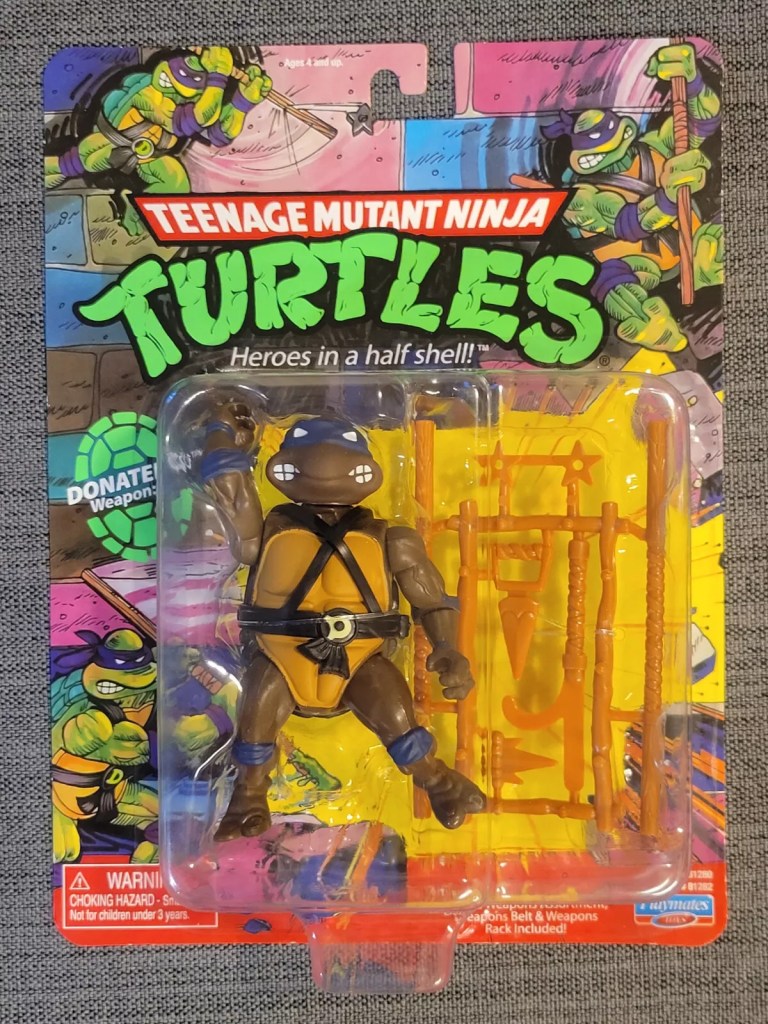
Years ago while still a college student, I worked at Toys R Us. Every so often we would have to do inventory. This allowed us to see how much stock we had on hand, how much we had to sell, and what was needed to continue to do business with the public. One particular season, Teenage Mutant Ninja Turtles were all the craze. I remember climbing high in the the rows of TMNTs to find that precise turtle a customer was looking for. Yes, we had a boatload of them. At some point however, we found ourselves short on Donatellos, one of the turtles. Then there were no Donatellos at all. Even still I would climb the turtle wall and pour through the turtles just for customer satisfaction. For weeks we turned away customer after customer looking for Donatello. One particular day, I was in the stockroom making some space and noticed a couple of large boxes turned on their sides. I boosted myself onto the shelf and pulled the boxes forward. Popping them open with my trusty boxcutter, I found gold. Or rather I found what we had been needing- Donatellos. Somehow during inventory, someone had failed to see the boxes. For weeks Toys R Us had been losing money on what we already had because no one recognized we had them.
Recognition, like taking inventory, is a way of taking stock. It has a way of offering us a moment of pause, a rare opportunity to reflect on what we have and the journey we’ve traveled. A couple of weeks ago, I had the privilege of being honored by two organizations at a local ceremony. As the announcer read through my accolades, I found myself momentarily detached, almost as if I were hearing about someone else. For a brief moment, I had to glance at the screen and remind myself that they were speaking about me.
It wasn’t until later that I truly internalized the significance of that moment. How often do we take inventory of our accomplishments, truly measuring the depth of our impact and the level we have attained? It is easy to get caught in the constant momentum of striving for more without ever assessing the full weight of what we have already achieved. Yet, taking inventory of our journey allows us to recalibrate our valuation of both our efforts and our worth in the marketplace.
This realization brought back a powerful statement that a coach shared with me last year. In response to my dismissiveness about my achievements, he said, “Normalizing greatness creates undervalued experiences.” At the time I thought it was deep but still didn’t grasp the power of the words. I refused to take inventory. I was still too focused on the next thing. When innovation and excellence becomes our standard, we sometimes fail to recognize it as such. What was once an extraordinary feat becomes routine, and in that normalization, we diminish the very experiences that once held immense value. Also, we have to consider how our upbringing plays into this thing of humility. Perhaps we grew up in a family or environment where bragging or claiming credit was seen as a negative. To counteract this we go full tilt in the opposite direction. In actuality it may not be humility at all but simply undervaluing ourselves by default.
This is a double-edged sword. On one hand, setting a high bar for ourselves drives continuous growth and improvement. On the other, failing to acknowledge and appreciate our own milestones can lead to an undervaluation of our contributions. If we don’t recognize our own greatness, how can we expect others to?
Thus, it is crucial to practice intentional reflection. Take moments to acknowledge how far we’ve come, celebrate the impact we’ve made, and recognize the value we bring to the table. Understanding our worth is not about arrogance—it is about alignment. It is about ensuring that our internal perception matches the reality of your contributions.
I invite you to take inventory sometime soon. Don’t hold back. Don’t let them feel foreign. Own them. Let them serve as a testament to the work you’ve put in and the lives you’ve touched. Because when you truly value yourself, the world will follow suit.



 Notes of A Native Son