
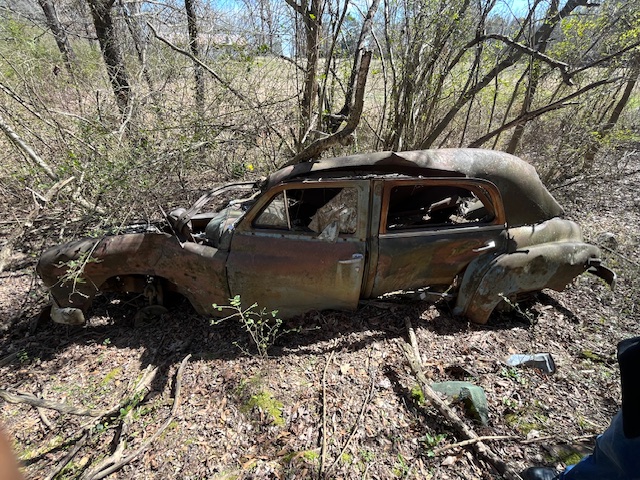
The other day, while walking in the woods of some property in the country, we came upon the crusted remains of an old Oldsmobile. It was the bare essence of a former glory—its frame twisted by time, its once-glossy paint now a muted patchwork of rust and decay. Time arched over it, nature had begun reclaiming it, vines weaving through the skeletal remains, composting leaves and branches settling into the crevices where an engine once roared. I know there had to be some wildlife housed somewhere beneath its hulking frame. At one point, this car had been a concept, a design, a plan, then brand new, rolling off a showroom floor with a pristine shine, full of promise. Possibly the esteemed object of someone’s dream. How many families had been transported back and forth, voices drifting from the windows as it sailed across the open terrain, ‘the new ruling power of the road.’ Then it was all over. Now, it sat still, wedged into the earth, forgotten. My first question was how it got there. Then something a lot more relevant: this too will pass.
Everything that seems real, solid, permanent, so pressing, so essential in the moment—it all fades in time. The things we chase, the worries that keep us up at night, the victories that swell our chests, the defeats that weigh us down—all of it moves forward, slipping into darkness, dissolving into the vast current of time. Nothing stays forever, not even the most polished, powerful satisfying machine you ever owned. And yet, here we are, so often caught up in the illusion of permanence. We find ourselves suffering in the shadow of what might happen. We shiver in frigidity or fear of a world we can’t control. We hesitate, waiting for the ‘perfect time.’ We dwell in regret, replaying the past like we can rewrite it. We chase, we cling, we grasp, as if we can hold the world still in our hands. But life doesn’t work that way. It is all fully alive and animated, moving on whether we’re present for it or not.
Perhaps the lesson in that old car wasn’t just about decay or impermanence. Maybe that crusty Oldsmobile was simply a reminder to truly live while we can. Death reminds us to live. To be present in our actions, in our relationships, in our own skin. To take in the crisp air on a morning walk, to laugh without restraint, to speak truth, to chase passions, to take the chance or risk, to show up for the people who matter. To live on purpose.
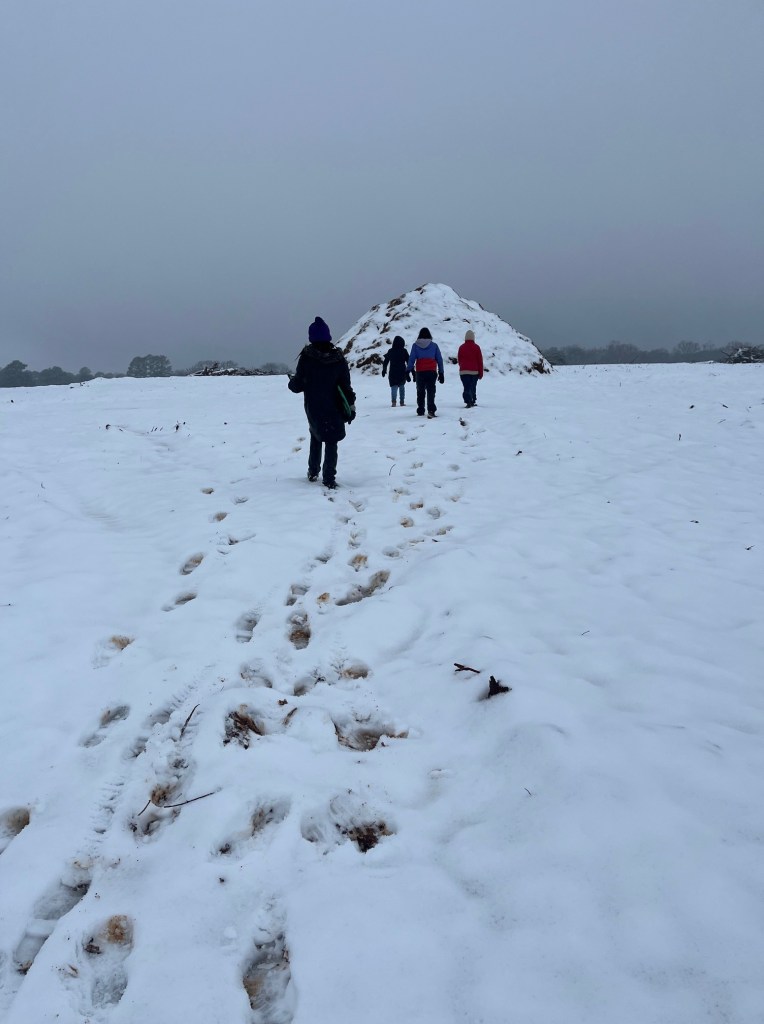
It’s a sobering thought to realize that one day, we too will be remnants—memories in the hearts of those we touched, footprints fading into the path we walked. I say we get up, get out and go live. We know where we will end up. No sense in tiptoeing toward it in quiet desperation. Make each footprint count as spring springs forth in this season of rebirth. And when those other days come, may it be said and known that we didn’t just exist in this thing. We lived it.
 Notes of A Native Son