
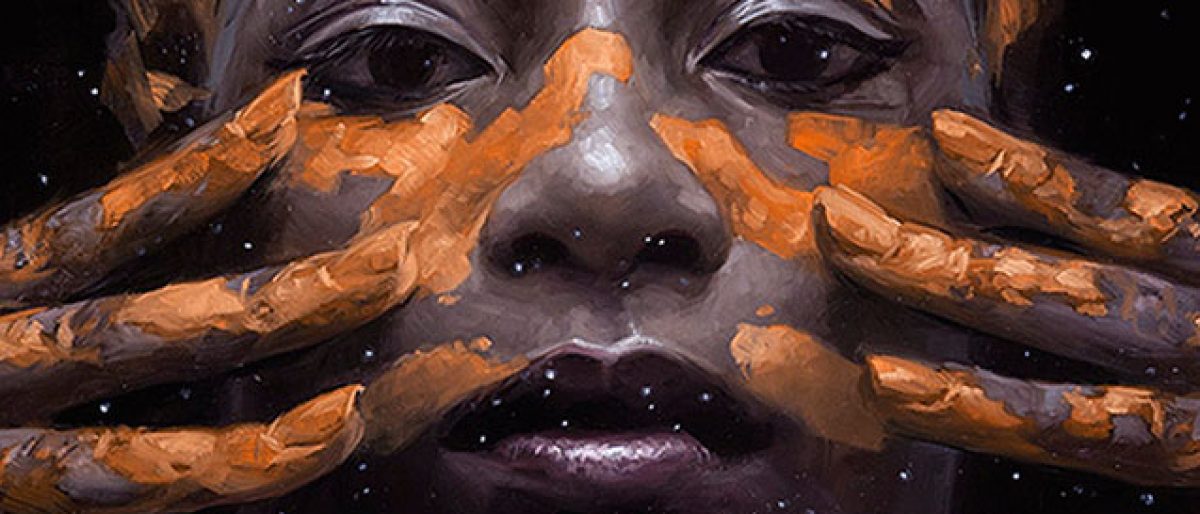
There’s something about standing in the cool shadow of death that reminds us to live. Not just to exist. Not just to breathe. But to live.
Recently, my aunt passed on. I stood beside her as we talked possibly more than we had ever talked before. At least one on one like that. Other times we had always been surrounded by other family members as we exchanged a few words here and there. In that still room, a holy hush wrapped itself around us. I looked down at her—and I saw her. Not as I had always seen her—but as she truly was. Her full lips. Her smooth, unlined skin. Her deep, brown eyes, wide listening. It felt like I was seeing her for the first time. I saw her almost perfect hands were manicured with no polish, barely warm as they wrapped around mine. I heard my Dad’s words come out of my mouth, “I want to pray with you.” When I finished, she continued in a whisper barely audible. Then she smiled.
She was not an old woman. Not by our measure. But here she was resting in that portal, that liminal space between breath and spirit, between what was and what will be. She spoke in whispers, each word labored, each syllable soaked in meaning. Then came the moment that now echoes in my soul. She took a deep breath—one of her last for the week—and as it left her lungs, it came forth with
“It is what it is.” At first, I thought it was just a form of resignation. It felt like so much more though. It was revelation. For me, one who values spiritual connection and ancestral knowing, that phrase carries weight. It isn’t about giving up. It’s about giving in—to divine order, to ancestral timing, to the eternal rhythm of life, death, and rebirth. “It is what it is” is not a shrug. It’s a knowing. It’s a surrender that comes with dignity. It’s the utterance of one who has come face to face with the edge of this world and has decided to speak peace to it.
In our communities, we often mask our pain with strength, with a fake stoicism. But there’s something radical about embracing what is. It is an act of spiritual resistance. A return to the old ways of being in relationship with the mystery. To look death in the eye, and still bless the moment with your breath! That is power. That is ancestral poise.
To her two sons—my cousins, no longer the little boys I remember running around—I want to say this: Your mother loved you with an undying love. She saw you. She knew you were and as you are. It’s is in your hands now to take that to the next level and be the best seeds she ever planted. make good on her investment. She carried you, not just in her womb but in her spirit. She watched over you with quiet strength — and she could let loose with some fire to get you in gear. We know she didn’t play. None of us are angelic all the time. Some of her final words to my ears, “It is what it is,” were not meant to harden or dismiss—but to hold us. She was teaching her final lesson. That life cannot always be understood, but it must always be honored. That even in the transition, there is truth and knowing that goes forever forward. That we don’t have to make sense of everything to be at peace with it. Let those words become your shield. Let them remind you that what goes away has not vanished, only changed form. That smile, that laugh of hers is still with us. Your mother is an ancestor now, an ascendant. She is not silent. She is speaking still, through memory, through love, through you.
To those who have loved and feel the loss—You are not alone. Our people have been burying loved ones for generations, and still we rise. Still we sing. Still we embrace and smile at each other at funerals, calling joy out of sorrow. The dull ache of grief may never leave you. But neither will the love. Love never dies. Stand up straight in the cool shadow of death—and allow it to remind you to live. To laugh. To cry. To say “it is what it is,” not with defeat in your heart, but with reverence on your lips. Those words to me, in that moment from my aunt, were a benediction. A battle cry. A blessing.

 Notes of A Native Son