If Not…For The Birds

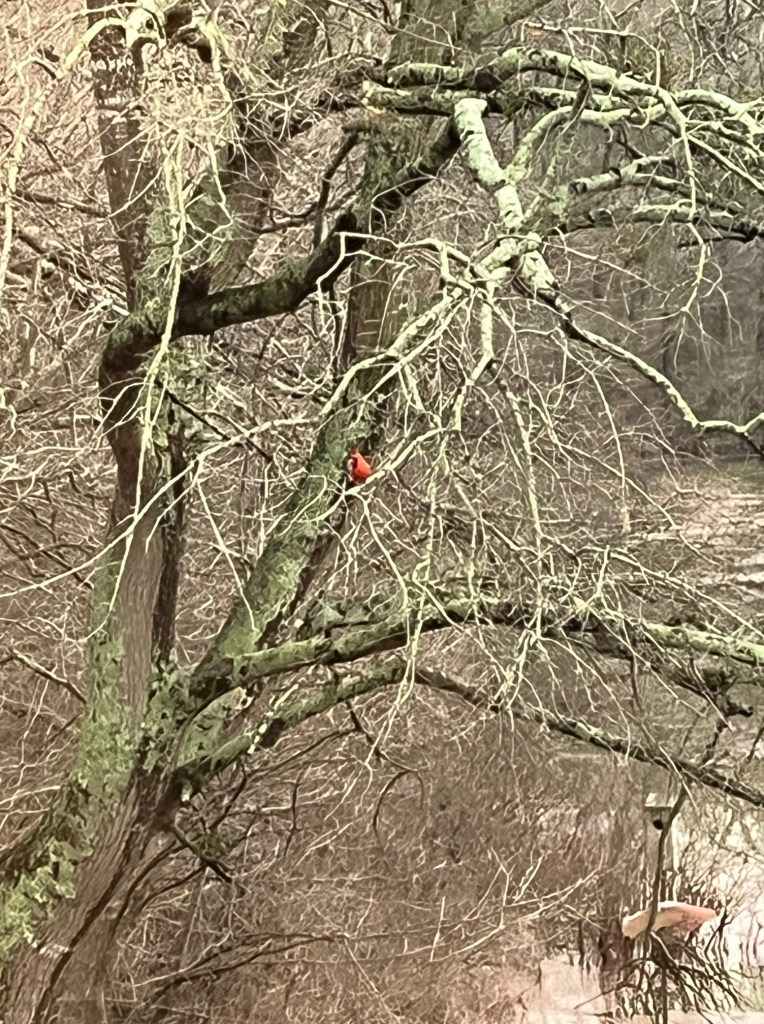
This year, I had the privilege of attending the renowned Festival of Cranes—a celebration of grace, migration, and one of natural world’s many intricate dances. While the elegant sandhill cranes captivated the crowds, my own attention was pulled away by an unexpected guest: a back a forth game of male cardinals darting through the naked wintry limbs, the red plumage striking against the bare landscape. This simple encounter took me on a journey of reflection, one centered on hope, intention, and the messages we receive if we pause to notice.

As a child, whenever we spotted a cardinal, we’d shout, “Redbird, somebody comin’!” It was part superstition, part playful belief that the bright flash of red was a herald of change, a sign that someone—or something—was on its way. Back then, we didn’t think much of it beyond the joy of the moment. But as I stood there watching the cardinal at the Festival of Cranes, I felt the significance of that childhood exclamation in a new way.

Cardinals have long been seen as symbols of hope and renewal. Their brilliant crimson feathers stand out unapologetically, even in the bleakest seasons, reminding us to embrace our individuality and worth. They seem to carry messages from beyond—a gentle nudge to reconnect with faith, spiritual practices, and the peace that comes from being present. In their quiet grace, they offer a sense of life’s continuity, a whisper that even in hardship, beauty endures.

That day, watching the cardinal, I felt these lessons deeply. It wasn’t just a moment to observe but a call to participate—to take the hope the cardinal symbolized and turn it into intention. Hope, when passive, is like a seed left unplanted. To elevate it into intention means to act on it, to let it shape how we move through the world. The cardinal’s red plumage wasn’t just a signal to stop and notice; it was a challenge to lean into that moment of reflection and ask, “What next?”

I carry the memory of the cardinal with me, its image etched into my mind as a vivid reminder to live with intention. The cranes taught me about harmony and connection, travel and poise while the cardinal urged me to take those lessons and weave them into my daily life. Hope, I realized, is not just something to feel—it is something to live…on purpose.

The next time you see a cardinal (or anything that pulls your attention away from the order of the day), pause. Breathe. Let its message remind you of hope, not as a passive lottery style wish but as an invitation to act, to engage. Take that hope, plant it, and nurture it into something that can grow and sustain you—and perhaps others. After all, “somebody” is always coming. Maybe it’s you.
Sabbath

Just over a year ago, I resolved to honor myself through, by, and for the work I do. Yes, I recognize that the work is the path to purpose, the production. However, there is no production without a producer. Therefore honoring myself with adequate rest and rejuvenation became more of a priority. I admit, however, with my imagination output and the resulting schedule, it’s been no easy task. It’s easy for me to run my body at breathtaking speeds and relentless productivity levels, simply because it will. I also know that it is not sustainable. At some point the piper must be paid.

As a child, I grew up in an ultraconservative religious household. Each week beginning on Thursday afternoons, we began preparation for the Sabbath. I recall one of my task was to use mayonnaise to clean and gloss the plant leaves. That, I did with tenderness and pride, leaving the leaves shiny and radiant. We shined the silver, did the dishes, ironed clothes, and Mom prepared the largest meal of the week all in preparation for our time of rest. By sunset Friday a calming hush had come to our humble abode. For the next 24 hours we were immersed in restfulness, reading, nature, communion, and religious services. The sabbath would be closed out with song, “day is dying in the west, heaven is touching earth with rest…” We recognized the sabbath as the seventh day of the week as noted in the Torah in the book of Exodus, verses 8-11. From a little tot on up, each week we would recite the verses beginning with “Remember the sabbath day, to keep it holy.”

The ultimate reason for the sabbath was rest. No just a casual rest but a deep abiding, reconnecting rest that would bring healing from the week and prepare us to meet the week to come.”Six days, it says we have to do all of our work but the seventh day, a day of rest, belongs to the divine, to rejuvenate and recreate us as sound human beings to maintain the embodiment of that divine. Otherwise we find ourselves depleted, scattered an mind, body, and spirit, operating in a capacity far lower than our capabilities. This weakened state affects us in every aspect of our existence from our individual health to our relationships. Yet we continue to push, push, push, until we crash. We consistently circumvent our internal preservation mechanisms, crying desperately for the slow down, by drowning it out with artificial adrenaline we call caffeine. Eventually, as I stated earlier, the piper will be paid.

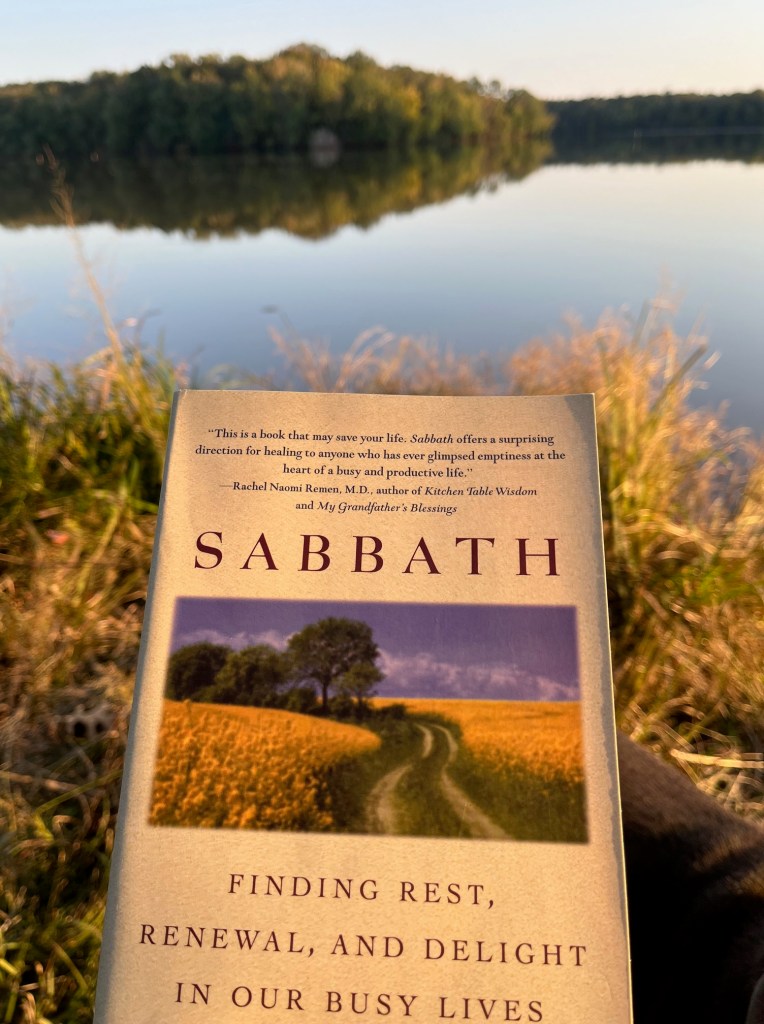
A few weeks ago, I picked up a book entitled Sabbath, by Wayne Muller. The understated cover of the paperback book reached out to me from the shelf. It felt soothing in my hands with it’s earthy colors woodland imagery. It’s subtitled Finding Rest, Renewal, and Delight In Our Busy Lives. For me it was a much needed reminder to reincorporate the joy and balance of the Sabbath in my life. The verse admonishes us to remember the sabbath, as though it was known that we would be prone to forget it. The sabbath is for everyone. We can start by designating specific times each week for rest and reflection. This sacred time can be marked by personal rituals—like lighting a candle or spending time in nature—to signal a transition into relaxation. Disconnecting from screens and social media during these hours allows for true rejuvenation, while engaging in meaningful activities—reading, hiking, or connecting with loved ones—nurtures our spirit. Incorporating mindfulness practices can deepen our presence, and sharing this time with family or friends fosters community and connection. Reflecting through journaling can also provide clarity and purpose. By intentionally embracing these practices, or different ones that serve you, we can reclaim the essence of the Sabbath, fostering a deeper life beyond the rat race pace that goes beyond mere existence and invites of to be a pART of the remedy toward healing our rest deprived world.

Curating Spaces

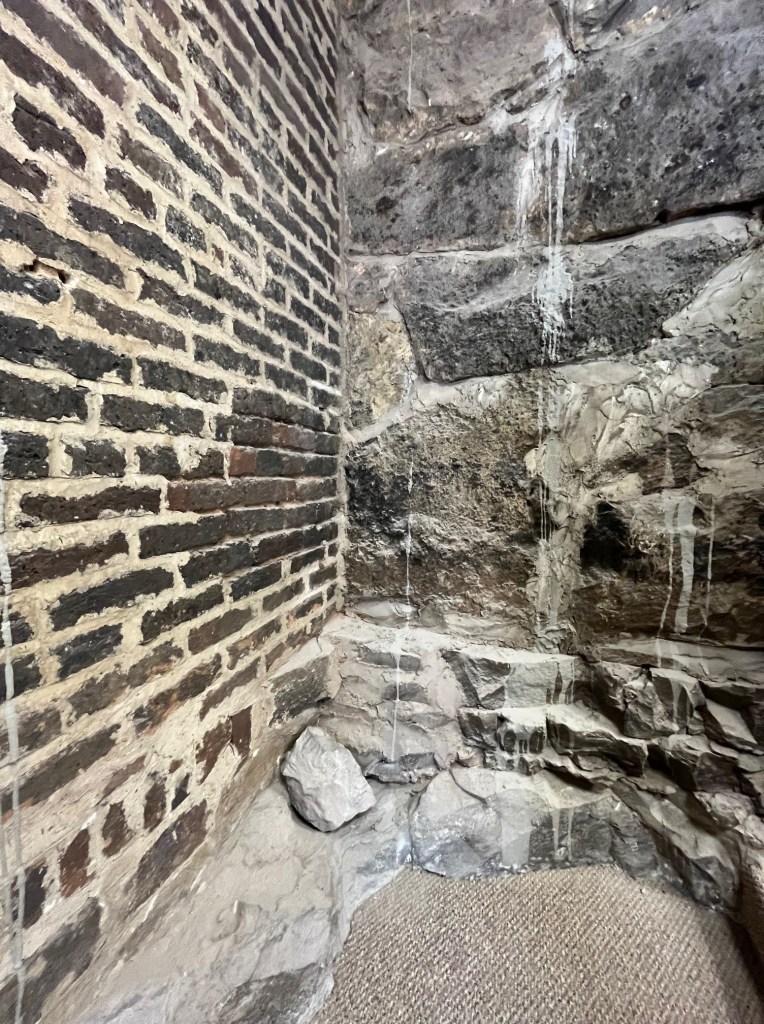
Curation is about much more than hanging art on walls or items in a collection—it’s about shaping environments that reflect our values, histories, and aspirations. As an artist, I recently completed a commission for the new City Hall, an institution of governance and civic pride. Yet, directly across the street, the basement of a former bank holds a darker legacy: it once imprisoned enslaved people, treating them as chattel collateral in its cold stony bowels. This stark contrast between spaces reminds us how intricately intertwined the present is with the past, and how our relationship with space has the power to elevate or diminish our humanity.

We are the curators of the spaces we inhabit—our homes, workplaces, public buildings, and the invisible spaces between us as human beings. For too long, access to these spaces, particularly those of influence and power, was denied to people based on race, class, or gender. Today, as we step into places where chosen sectors of society were forbidden, we carry a responsibility to reimagine and reshape them with intentionality. Whether we are conscious of it or not, we design the spaces that define us, deciding who gets to be seen, heard, and respected within them.

Curating space goes beyond physical walls; it’s also about the various interactions that shape our societies. How we treat one another in these spaces, the stories we honor, and the legacies we confront are all part of this curation. Just as we, as artists, choose what to display in a gallery, we choose what to elevate or omit in our life space as well. Spaces, after all, are more than just physical—they are emotional and symbolic. They carry the not so dead weight of history but also the potential for resurrection and transformation.

Today, as we gain access to spaces once closed to some by law, litany, or self-imposed limitation, we do so with the knowledge that we are responsible for more than just being there. We must curate them for ourselves and future generations, ensuring that the injustices of the past do not persist and walk among us in contemporary designer hoods. Every room we enter, every relationship we foster, and every piece of art we create becomes a part of that narrative—a reflection of how we choose to inhabit the world and bridge the spaces between us. The question is not just how we fill these spaces, but how we use them to uplift and honor those who came before, while making room for those yet to come.

Same Sun

My oldest daughter was born in Crozer-Chester Medical Center in Chester, PA. Those hallowed grounds were once occupied by the Crozer Theological Seminary attended by such notables as J. Pious Barber, Samuel Dewitt Proctor and Dr. Martin Luther King, Jr. These were giants of men, men of faith I hold in high regard. I often walked these grounds where they walked in honor, remembrance, and reflection.  

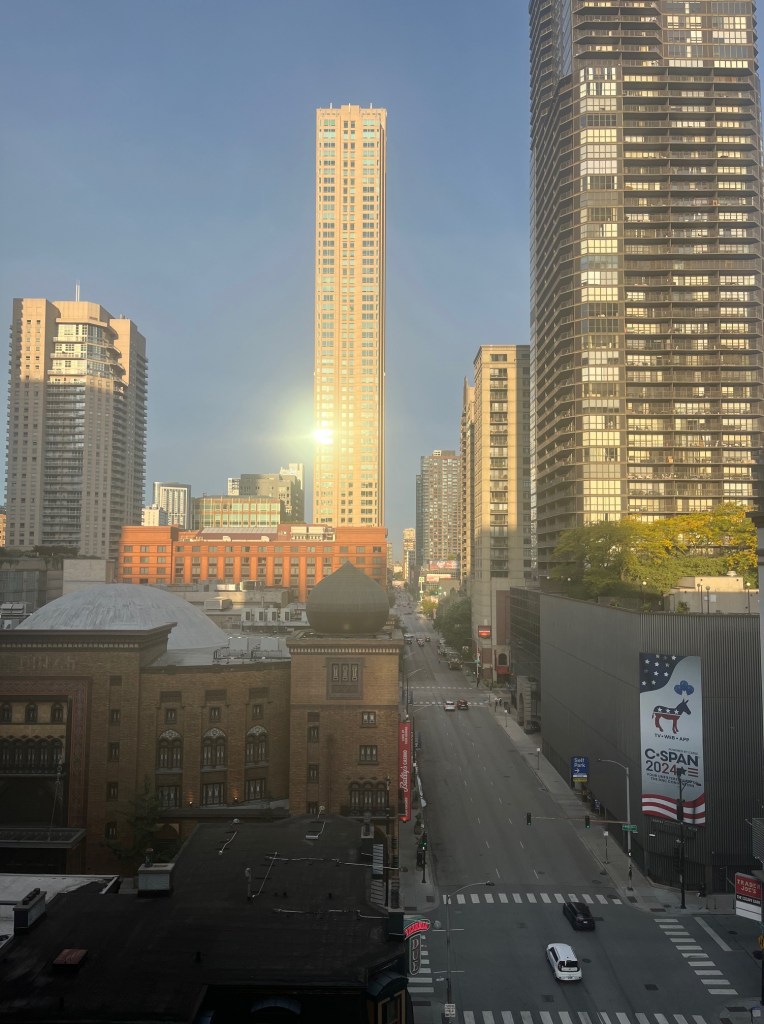
We had relocated to Pennsylvania on faith in what I do as an artist to start a new life. We named our daughter Imani, which means faith with Arabic and Swahili origins in East Africa, as a testament to that move. This year Imani returned from Alaska, another faith move – there and back. At the morning of this writing, she is on a beach in Maryland, as I am in one of my favorite places on the planet, Chicago.  We exchanged sunrise images. The one thing constant in them both is the glow of the morning sun. Faith is the knowing that the sun will always rise. No matter how dark the night or tumultuous the storm, that golden orb ascends to the heavens as a metaphoric reminder. A reminder that we can always begin again, and that success came before us on the same planet that we walk. Sometimes even the same ground that we walk over. Remembering and thinking on things like this can help to put things in perspective as we go about the tasks involved in doing what we do.

Think of your most revered luminary. In this case allow it to be someone that you admire in your field of choice. Someone who has made accomplishments in the area of which you aspire to succeed. See them in action in your mind going about their tasks from the mundane to the magnificent. Above them every day is the same sun that shines down on you. The setting of your story has the same lighting as theirs. The warmth, the light, the brilliance — all of it bathed their path just as it bathes yours. The same source of energy that sustained their journey is sustaining you now, fueling your own rise, your own breakthroughs.

It’s easy to look at those who’ve gone before us and imagine that they had some secret, some hidden resource, but the truth is they moved forward in the same rhythm of faith, resilience, and consistency. Like the sun, they showed up, even on cloudy days when success seemed distant. And just like the sun, their brilliance was a reflection of what already existed inside them.

Faith, like the light of the sun, is a force we often take for granted, yet it’s always with us. Just as we trust that the sun will rise each morning, we must trust that our own light, our own success, will also emerge — even when it’s not immediately visible. Even on those days when we whisper in quiet desperation,”What the hell am I doing?”

Imani, faith, is not just the name of my daughter; it’s the principle that guides the journey. It’s in the small actions, the steady discipline, and the unwavering belief that, just like the sun, the time will come to rise higher. No storm, no night, can prevent the dawning of your potential. So as we stand on this shared ground, beneath this shared sun, know that you’re already on the path — step by step, light by light, day by day, moment by moment — to becoming the luminary that will shine for the generations to come.

Faith

Stepping out on faith as an artist is like moving through life with a paintbrush in hand and a large blank canvas looming in front of you, trusting that your next stroke will reveal something desired. I don’t limited faith to a shadowy belief in the unseen—it’s a commitment to your purpose, even when the path ahead seems unclear. Napoleon Hill defines faith as…

“Definiteness of purpose backed by a belief in the attainment of the object of that purpose.” 

You can replace the word definiteness of purpose with intention for more clarity. For those of us who choose non-traditional careers, like being an artist of any kind, faith is essential. It’s the long arm of assurance pointing the way. It keeps you grounded to an eternal source, especially when external validation is scarce. Living in faith fuels your perseverance to create in ways that challenge the status quo.

Faith in art making is necessary because it’s a bridge between the inner vision and outer manifestation. When I chose to walk this road as a artist, with preparation from my parent’s kitchen table spread over with comic books and pencils to Alabama A&M University to The School of the Art Institute of Chicago, it was a leap into unchartered waters. But in that leap, I found a new kind of freedom. A freedom that flowed over into all arenas of living.

I was always being questioned as to whether being an artist was a real career. Could I actually make a living doing this? I’ve been blessed to travel many roads and pathways not only making a living but truly living. For me, art making isn’t just about creating objects and images—it’s about rolling passionately in the sheets with life and birthing stories, preserving histories, and connecting with the world on a deeper level. Faith gives you the courage to share those stories, even when the world might not understand them right away.

On the tailgate of a truck I had was the mantra, “Life is art, Art is life.” Life, like art, requires faith in your vision and your process. Mind the vehicle that is taking you through this life. Trusting yourself enough to take a non-standard path or do something that has been reaching out to you for the longest, is a bold act of creativity in itself. It’s saying, “I am enough, and I trust that my unique journey will lead to the fulfillment of my purpose.” In art and life, faith is the G-force (in this case, God Force) that helps you move forward, not because you fully know the outcome, but because you truly believe the journey is worth it.

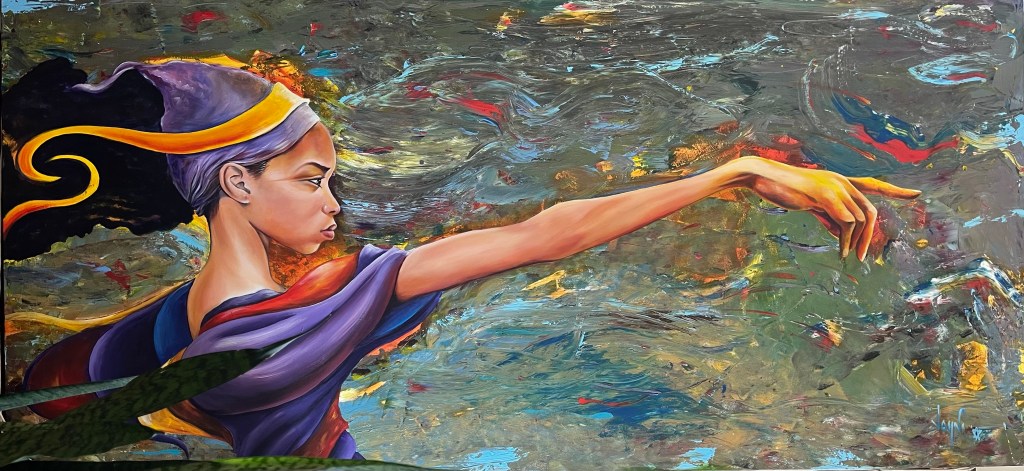
Beyond HERe, acrylic on canvas 84″ x 44″