This is to feeling a bit poetic… and pensive. Yes, pun intended.
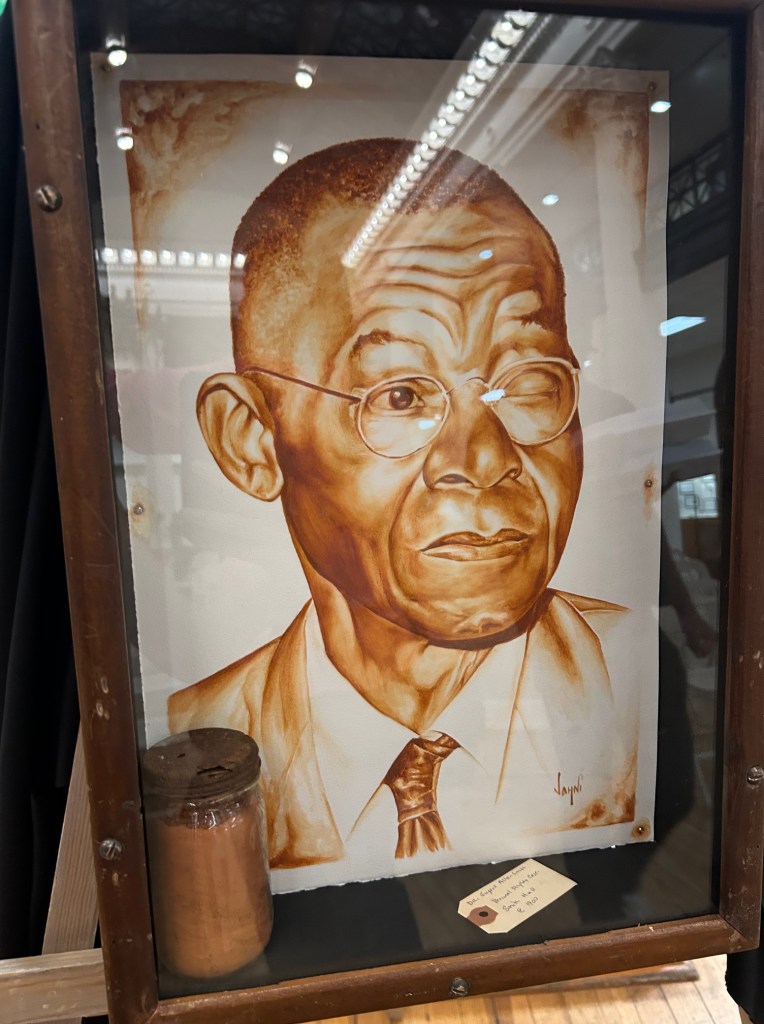
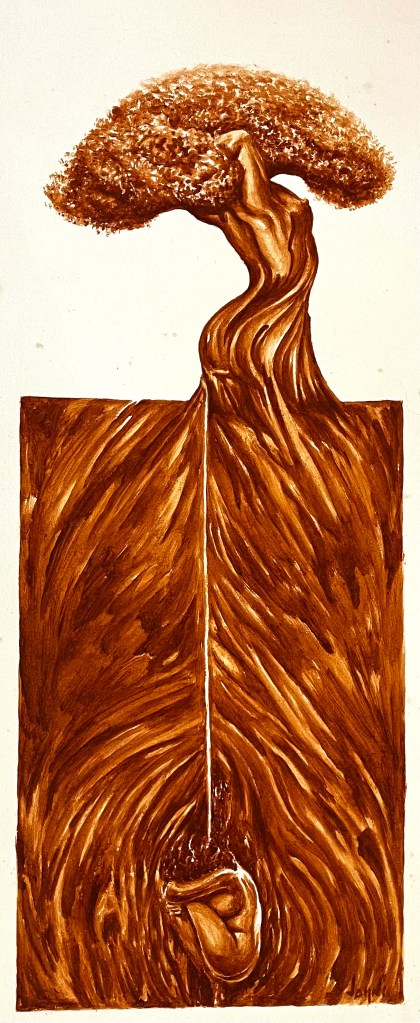
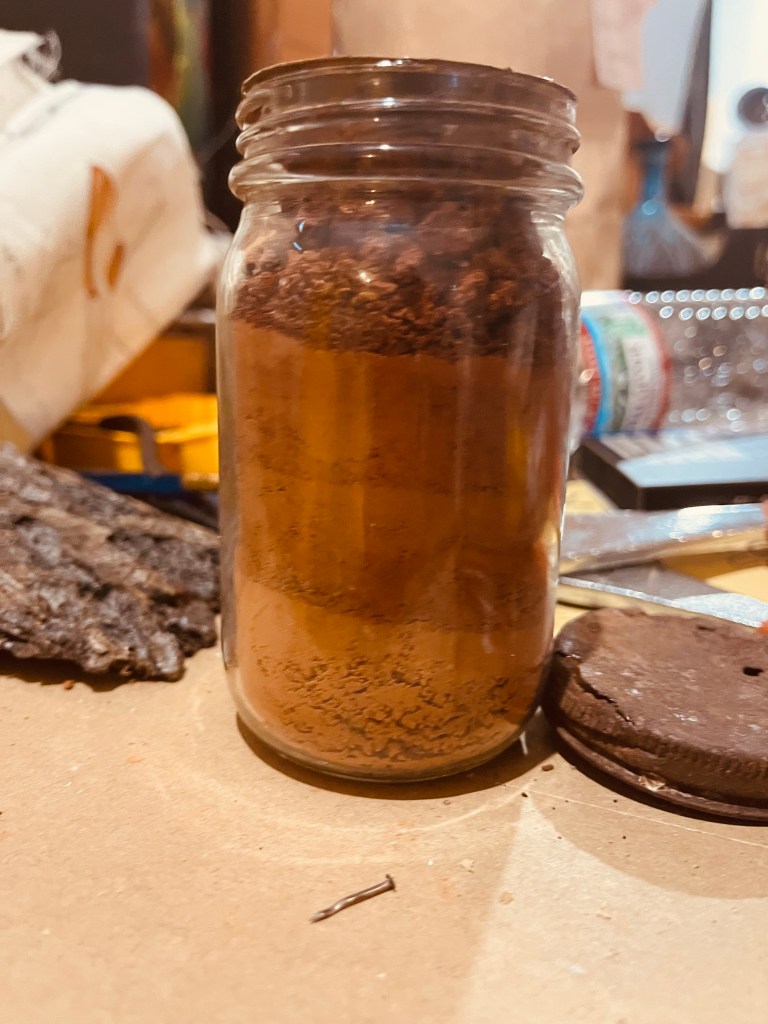
Beneath my feet, a red earth hums — thick as blood, rich as memory. Alabama clay, magic dust, The marrow of the land where my people pressed prayers into the belly of earth with bare hands.
They say it’s just dirt. But I know better. I was told: This clay is rich with the blood of your ancestors.”
We walk on a carpet woven from bones and iron, soil alive with stories told too proud to die, too wise to remain silent.
This is hoodoo rouge,
Alabama alchemy cosmic dust, the same red hue that stains the skin of Mars — as above, so below. A map of the heavens pressed deep into my palms and the soles of my feet.
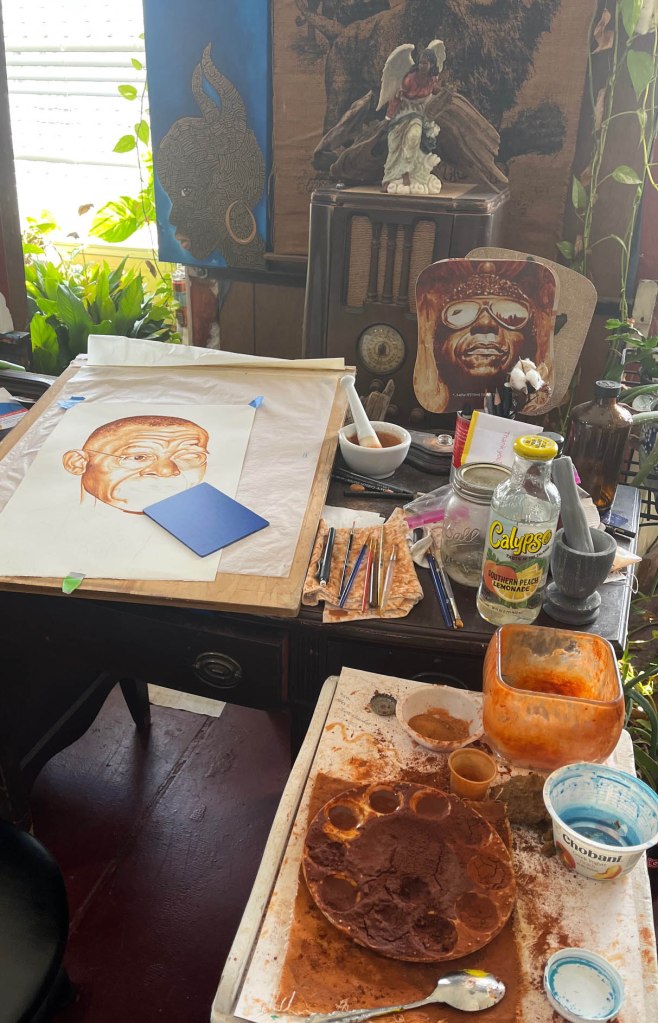
It is no accident that this ground cradles me. It is no accident that my hands shape it, that my brush stirs it into paint,
Into past into prophecy.
What others call clay, I call memory. I call power. I call Divinity’s quiet language speaking in crimson whispers.
In this earth, I see my people rising, not as ghosts but as constellations, ascendants marking the way for those yet borne.
And so I gather it — pinches of past, handfuls of hope — not to conjure ill or trade in superstition, but to remember that we are more than flesh, more than fear, more than forgotten.
We are magic dust, we are stars, we are the red earth’s gospel, sung long, low, and rising.
The other day, I pulled up to a family member’s house. Across the yard, a young man bent his neck, eyes locking on me in recognition, then called my name. It was a former student—an award winning visual artist. He walked over, eager to share life talk like we had back in the day. I noticed a black guitar case strapped to his back and asked about it. The floodgates opened. He swung the case around, drew out a basic looking electric guitar, and for the next 20 minutes or so, plucked out some mean chest thumpin’ neo-blues riffs. It was a sight—his lanky six-foot-plus frame bent almost double, draped in bright patchwork clothes, pants sagging, unleashing sounds I could feel in my soul. Sounds that were older than both of us put together and multiplied. He didn’t even know he was playing the blues, but he had it. His eyes kept darting up for approval. I nodded, bobbing to the ping and thump of the instrument, inspired. “Play that thing, boy, play!” I was late to my destination, but right on time for the reminder: whatever you have to offer through your craft is as vital for these times as the beat in our chests.
In all the twists of science and biology, I stand on the belief that we were not here by accident. Our gifts and talents were not haphazardly bestowed, or given to be buried in fear, or tucked into the closet of our indecision. This is the time for which we were made. The world groans for light, for beauty, for truth — and our hands carry the spark. Do not shrink. Do not wait. Create boldly. Sing loudly. Build fearlessly. We have been molded and shaped for such a time as this.
There come moments in history when the ground itself trembles with the weight of what must be done. Moments when darkness crowds the horizon, when fear and confusion battle for our attention. Moments when ordinary people are summoned to do extraordinary things. The temptation to shrink back and stay silent grows strong. But it is in these very moments we should heed our calling — a call to those who may not even know yet, to the comfortable, to the idle, and to the ones who can feel the fire shut up in their bones. We were not given our gifts by accident. We were not given our vision, our voices, your hands, nor our hearts merely for quiet seasons. We were given them for such a time as this.
We need your art. We need your song. We need your poem, your painting, your dance, your bread rising warm in the oven. We need the light you carry, even if it flickers small in your chest. Especially then. We stand in need of the idea only you can birth, the story you are writing. Now is not the hour to be consumed by the chaos swirling around you. Now is the hour to reach into the storehouse of your soul and bring up what has been planted there. Your creative gift is not a pastime or hobby; it’s a weapon forged for battle, a balm for the wounded, a beacon for the lost. It is how you will move the needle, shift the atmosphere, heal the broken, and awaken the sleeping.
Your thing is your art and it is not merely something you do; it is something that does. It does the work of breaking chains and restoring sight. It stirs courage where fear has rooted. It plucks the doubt from the garden of hope. It resurrects dreams thought long dead. It sows seeds of change that governments and empires cannot stop. It is not weak. It is not trivial. It is power, entrusted to your keeping. So rise up. Take up your brush, your pen, your voice, your hands, your hammer, spatula, or spade. Do not wait until you feel ready. Do not bow to the lie that you are too small or not good enough. What you have is enough, because what you have was given to you by the Author of time itself. In days of uncertainty, creativity is an act of faith. In days of despair, beauty is an act of defiance. In days of division, the act of making, sharing, and being is a sacred rebellion for liberation’s sake.
History is not forged by those who sit and wait. It’s made by those who dare to bring forth what they have, however imperfect, and place it on the altar of the times they are given. So pick up your pen. Strum your instrument. Shape the clay. Sing the song. Bake the bread. Write the words. Build the bridge. Paint the vision. Move your body. Walk boldly into the now. Create boldly in it. Offer your light into the dark. Offer your voice into the silence. Offer your hands into the work. Offer the world that which only you can give. You are here for such a time as this.
From childhood, the red clay of Alabama has been more than dusty earth beneath my feet — it’s been companion, witness, keeper, and quiet participant in this life’s southern screenplay. Those deep, iron-rich hues tell tales far older than roads, houses, or city outlines. This clay, saturated by millennia, holds within it the memory of those who walked, worked, sweated, prayed, and bled on it. I recall a professor once telling me, “This Alabama red clay is rich with the blood of your ancestors.” It was then that I began to understand — this soil is not just ruddy dirt; it is charged matter, a living archive.
In the age old folk wisdom of the South, particularly in the African American tradition, earth is not a passive object or substance. Clay and soil have long been used as vessels for intention — for grounding, for protection, for healing, cleansing, and for calling forth what is unseen. The red clay in particular, with its rich iron content, acts almost like a spiritual conductor, transmitting energy between the seen and unseen worlds. It anchors prayers, catches tears, and carries whispers into the earth’s core. But its power extends beyond the personal or mystical — it is cosmic. Science teaches us that the same iron oxide that reddens Alabama clay also exists in places like Morocco, Tehran, Nigeria, Kenya, and yes on the surface of Mars, giving the planet its scarlet glow. There’s something poetic in that: this humble dirt is a terrestrial mirror of a celestial body, connecting us to the wider universe. How we walk should not be common because what we walk upon is not ordinary — it is stardust, drawn down to earth, thickened and spread by time and memory.
This allows me to weave this red clay into my work not as a symbol of something superstitious, but as a tangible metaphor for what binds us all: dust to dust, earth to star, ascendant to descendant. It’s a reminder that our faith traditions, though varied, often share this same foundational truth — that life is cyclical, that spirit moves through matter, and that the earth itself is a key element in the divine story. I have come to see red clay as a sacred material. It quietly affirms what so many faiths already teach — that we are intimately connected to both the earth and the heavens. We are tethered to power. May each step we take upon this hallowed ground remind us of our origin story, our resilience, our rootedness, and our inevitable rising.
This morning, as I lay in bed far past usual, with the sunlight spilling into the room, my mind circled around a familiar yet complicated idea of being okay. What does it really mean to be okay, to be alright? Not in the way we toss it around in passing conversations, but in the quiet, honest places within ourselves. On the path I’ve chosen — this project-based, often unpredictable existence as an artist, I find myself constantly moving between points — this project, that commission, this opportunity, that possibility. And in every moment, I realize I’m often searching for a position where I can quietly say to myself, I’m okay. Not necessarily victorious. Not defeated. Just okay. Okay with where I am, or where I thought I’d be by now. It’s a constant negotiation between expectation and acceptance.
When we meet people, we ask how they’re doing. “I’m okay.”“I’m alright.” Simple words that cover so much. Sometimes they’re true. Sometimes they’re placeholders. And sometimes, they’re shields we use to keep the deeper, heavier parts at bay. Lately, I’ve started to wonder — what do I mean when I say I want to be okay? Is it peace? Is it progress? Is it simply a quiet wrinkle in time where everything doesn’t feel like it’s pressing in? Am I hoping for a point in my life, or my work, where I can be completely alright with what is? And if so… does that place even exist, or are we forever chasing it, catching only glimpses as it moves just out of our reach?
I’m learning that maybe okay isn’t a permanent destination. Maybe it’s a fleeting pause — a breath — a fragile alignment between what’s happening around me and what’s happening within me. It’s the moment I stop measuring, stop chasing, and simply allow myself to be. Today, I’m in search of an okay that may not be a finish line or a reward, but a quiet, honest moment where I can say to myself, I’m alright… as I am, right here, right now. And maybe for today, that’s enough. So if you find yourself searching too, know that sometimes, okay isn’t a place you arrive at — it’s a moment you allow.
Last week, while visiting a job site with a business associate, an unexpected moment unfolded—one that has been echoing inside me ever since. We were talking through project details when an unhoused gentleman approached. Nothing unusual in a city where gentrification collides daily with poverty. But what came next unraveled some of the lines we tend to draw between people. Both men’s face lit up—not with friction, but with recognition. Turns out, they grew up just a few houses apart. Same block. Same neighborhood. Same era. I couldn’t help but ask what many might think but not say aloud: “What made the difference?” One man with homes in multiple cities, running quite lucrative ventures across several sates. The other, navigating life on the streets. He didn’t hesitate. “Attitude,” he said. That was a common answer. One that I actually expected. The kind of thing you hear in seminars or printed on coffee mugs. But it didn’t sit well enough with me for a number of reasons so I pressed further. That’s when he said it…
“It’s make-believe.”
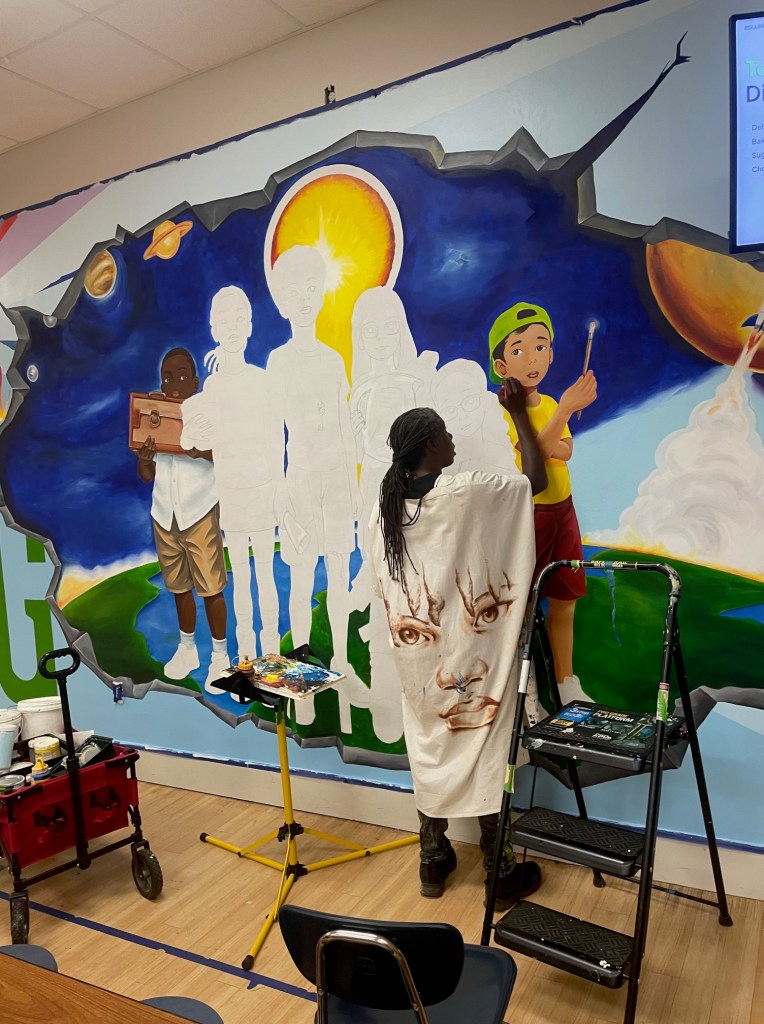
“Make-believe.” I repeated the words. He went on, “Make-believe. I make believe I can do something or be something… and then I just start working toward it and make it real. It’s all made up anyway— laws, the dollar values, titles, cities, streets, and names. So I just make believe and do it.” We both chuckled at the way he made is sound so simple. But then… it hit me, feeling like home. Make-believe is the same tool we wield freely as children before the world tells us what is and isn’t possible. The same gift that built spaceships out of cardboard boxes and kingdoms out of yard dirt. Pillows became forts and sticks transformed into swords. Towels became superhero capes billowing in the wind as we charged through the house, out the door and leaped from the front porch in that brief airborne glory of flight. It is in so many ways the same energy I now use as a creative. I imagine what doesn’t exist yet—and then bring it into the world out of a blank canvas, a sheet or paper, or a wall…or whatever else.
It’s not pretending really, it’s a form of creating. It’s so easy to think of imagination or daydreaming as child’s play, but what if it’s actually the cornerstone of everything real? What is money, after all, but a mutually agreed-upon myth of perceived value? A green piece of paper backed by our belief. What is a city but a series of stories and structures laid out in grids and street signs activated by someone’s rules of the game? What is a career, a title, a boundary—except a fictitious outline agreed upon by the masses? Just food for consideration here.
The difference between one person and another, between despair and drive, between stagnation and growth, might just be one’s willingness to believe in the invisible long enough to build it. Make-believe. That’s what creatives do. That’s what visionaries do. That’s what children do. Then we grow up. Perhaps that’s what we’ve lost in the vainglorious grind of adulting: the sacred skill of making believe. But here’s the beautiful twist—I’ve come to understand that the artist and the entrepreneur, the educator and the dreamer, the activist and the builder—all require the same core recipe: imagination infused with intention, carried by action.
We imagine. We believe. We begin. We become.
So next time someone dismisses “make believe” as a childish thing, we can smile and nod… knowing full well that the world we live in—every towering building, every invention, every institution, political or otherwise—once lived only in someone’s imagination. It’s all made up. So, if we don’t like the world we live in, just like someone made us believe in the this one, let’s craft another more equitable one of our choosing. Our inner world would be a great place to start.
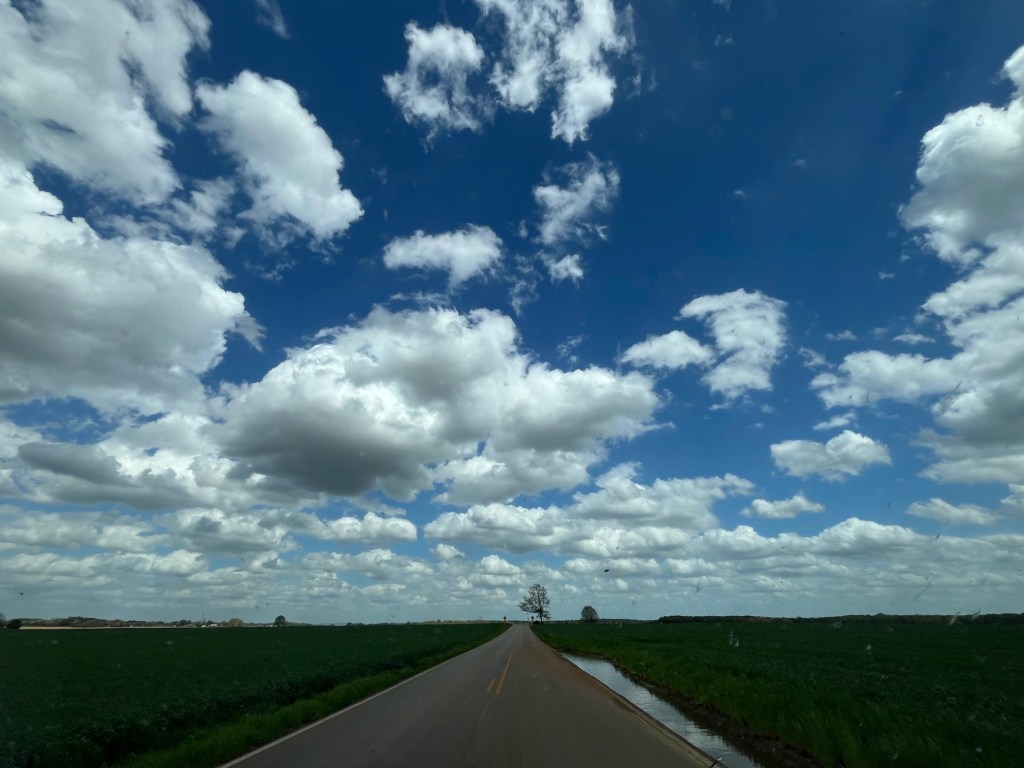
Driving out in the backcountry of Madison County, Alabama, near where I live, never disappoints. Just ahead and to my left across a field on a straight country road, the clouds had parted. Sun slivers filtered down through them like a scene from a science fiction movie. For a moment, I imagined being lifted up, joining a congregation of aliens who would send me back with all my superpowers revealed—everything suddenly feeling possible. Another thought that crossed my mind was the age-old reminder: behind every dark cloud, there’s a silver lining. It’s a comforting, almost cliché notion, but one that always gives me hope.
Yet, as I pondered these whimsical ideas, I couldn’t help but hear the voice of an old friend in my head, the one who would often point out, with a smacking of their lips, “They’re just clouds.” And maybe that’s true—maybe that’s all they are. But sometimes, I believe it’s about what we choose to see. Those clouds could be just that, or they could be the start of a story that feels as big and strange as the universe itself. It’s all in how you look at it. In the end, it’s not about whether those clouds are just clouds or something more. It’s about how we choose to see them or peel ourselves from the harsh reality of an overstuffed existence. Life is full of just ordinary moments, the mundane that we all pass by without a second thought. But within those moments, if we allow ourselves, there’s room for wonder, magic, and connection. Some cultures refer to these events as omens, others as divine whispers. It’s like the space between the clouds and the sunlight—there’s something in that gap, a glimpse of possibility, if we’re open to it.
So, maybe we’re all given little opportunities to “see” beyond the scene. Sometimes it’s a patch of light breaking through, other times, it’s simply choosing to imagine what’s not immediately visible. The mundane, when seen with the right eyes, can become something far more extraordinary. And maybe, just maybe, that’s the real magic.
Last week while sitting in my studio working on a red clay piece, the words of an artist mentor came to me. He had talked at length with me on the unique nature of my work and ended with, “nobody has the connection to this material like you do. Nobody is doing this.” The real vote of confidence was when he requested to trade a piece of work. Knowing the price points of his work, that gesture proved that he also recognized the value of mine.
When I looked around me at the array of red clay values, alchemy comes to mind. I’m not just painting g with a substance. This material is imbued with the blood of our ancestors. I am painting with an iron-rich life substance – a conductor in the highest order. That is golden. My mind then turned to an often overlooked detail in the legendary story of David and Goliath. David, the shepherd boy, had honed his skill on the hillsides near his family’s home. He had forged his will out there in solitude where no one else could see. He had built his confidence, his faith muscles in the crucible of time and the elements where he was alone guarding and caretaking for sheep. Before David stepped onto any battlefield, before he took up his sling, before he walkup up on a giant that punked seasoned warriors—he made sure his actual compensation was clear. All the accolades, awards, and pats on the back aside. He was making sure he was getting paid.
Three times, as the story goes, David asked what would be given to the man who defeated Goliath. Not once. Not twice. Three times. This wasn’t arrogance. It wasn’t greed. It was an understanding of the value of what he carried: a combination of skill, will, and confidence (faith) that made him uniquely capable of achieving what no one else would or could. David didn’t assume he would be taken care of just because he was doing the right thing or doing a good job. He ensured that what he brought to the table was recognized and would be rewarded accordingly.
Yet, in creative fields—and in life—many of us fail to take this stance. We discount ourselves to get the commission, the job, to be liked, to gain acceptance, or simply because we fear that if we demand our worth, we’ll be passed over. All too often we take far less than we should, shrinking our worth. The reality is this: the world will treat us with the value we place upon ourselves. Oprah Winfrey sealed her bid as the queen of daytime talkshows. Jay -Z is not just a businessman, he is a business, man. K.Dot made it clear for all time, They not like us. David used his sling and not the kings sword, shield, or armor. Use what you have in order to do what you do. Preparation in skill, will, and confidence sets the foundation for success, but declaring your value is what ensures you receive it.
“In business as in life –You don’t get what you deserve, you get what you negotiate.” Chester L. Karrass
Skill is the ability—honed, tested, and proven. Will is the internal drive—the persistence to see things through despite the size of the opposition, the odds. Faith is the confidence that your preparation will meet the opportunity. The sum total of these three should be your value, your worth, not just in theory but in real dollars and sense. Yes, I did mean sense. So, the next time you step to an opportunity, ask yourself: Am I walking in with phenomenal skill, relentless will, and unbreakable faith? And just as important—am I making sure that my value is recognized before I take the first step? David’s victory wasn’t just about courage. It was about knowing his worth. Ours should be too.
“…We have to matter. If we don’t, there is no future worth saving.” +Ms Marvel
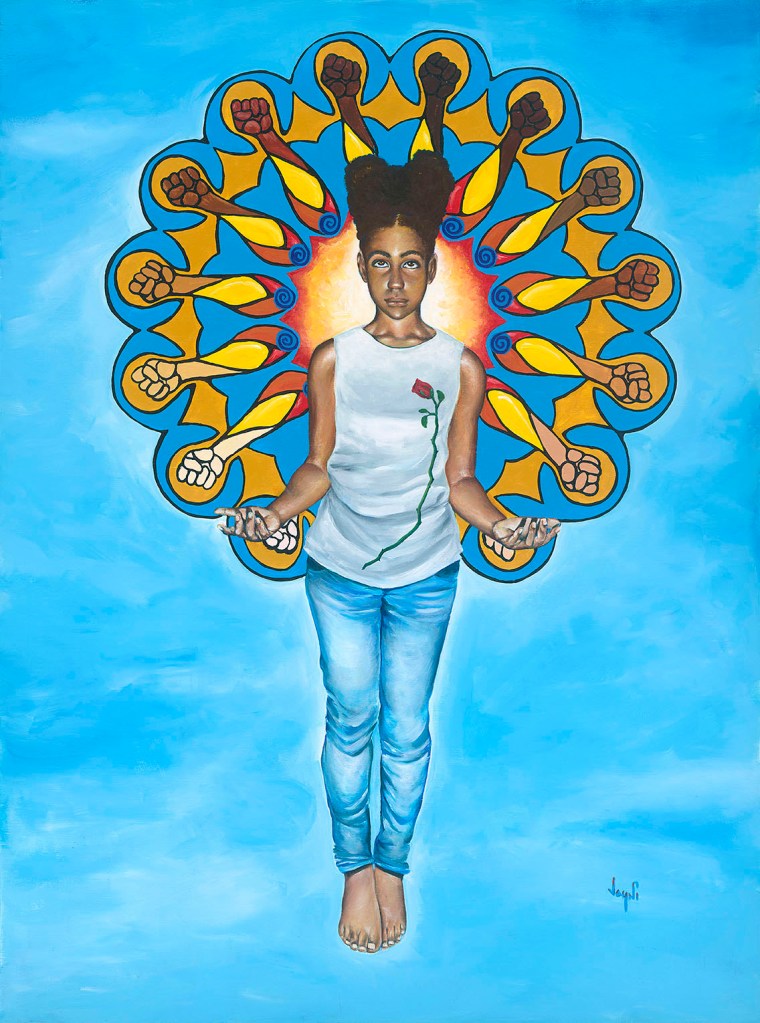
We are all born with something—an energy, a light, a force uniquely ours. But it doesn’t come fully formed. It’s shaped and forged in the fire of life’s torque. Our superpower is not limited to our natural abilities. They are the sum of us, our defeats, our victories, our past, our pain, and our passion. It is rooted in everything that has tried to break us and/or has built us to now. It’s all hammered into a weapon of choice for this life journey.
As an creative, art has been my magic carpet ride, my hammer, my wings. Not easy by any stretch, but the thing that has carried me as I was carrying it. The thing I have fought with, danced with, and ultimately surrendered to. We wrestle daily with who we are and who we think we should be. But true power is in acceptance—the acceptance of all of who we are— the best and the beast. Think about superhero characters like Batman, Daredevil, or The Hulk. Their power isn’t just in their strength, intelligence, or skill. It’s in their wounds. Batman’s greatest weapon isn’t his wealth or gadgets, but the trauma that turned into his mission. Daredevil’s blindness became his most heightened sense. The Hulk? His curse became his power. They didn’t run from their pain; they harnessed it. And that’s the secret: our power isn’t just in what we’re naturally good at—it’s in what we’ve survived, what we’ve wrestled with, and how we choose to wield it.
I think back to a moment of revelation years ago, standing atop an old building in a small municipality in Antioquia, Colombia, South America, preparing to do a mural with my team of local children. These children had a fraction of what they have in the United States in terms of material possessions, yet standing there, with the connection we had, looking out over the area, we felt invincible, wealthy in spirit and verve—on top of the world. I was right where I was supposed to be and the world was my palette. There was no lack, only creation. No limits, only possibility. That’s the essence of power: not what you have, but what you create from what you have. It is of utmost importance that we spread our wings. We have to matter. If we don’t, there’s no future worth saving. Our existence, our struggle, our triumphs—they matter. We matter. We don’t fight just to fight. We fight because what we do, what we create, and how we live shapes the world present and future. If you’re reading this and thinking this is about someone else and not you. Please be reminded that it is you that make up the us. It is the we that will ultimately win. Every time we rise from pain or paralysis, bite our lip and keep on keeping on we lay claim to a little more of our power. We command our space and carve out a chunk for those who come after us.
We can spend an entire lifetime running from ourselves, trying to be what the world deems acceptable, or we can own our superpower—our full, unfiltered truth—unapologetically. Our stories are not just the parts that shine or look good in snapshots of social media. It is also the shadows, the scars, the doubts, and the falls. The key is in bringing it all together, forging it into something undeniable, unfolding our tomorrows of choice. So, I take this loving liberty to challenge you: Own your superpower. Wield it unapologetically. Stand in it fully. Because once you do, nothing—not circumstance, not rejection, not fear, not even that ragged voice that’s plagued you all of your days—can keep you from rising. Allow no thing on this side of glory to break the rhythm of your stride…let’s go dammit..!
The other day, while walking in the woods of some property in the country, we came upon the crusted remains of an old Oldsmobile. It was the bare essence of a former glory—its frame twisted by time, its once-glossy paint now a muted patchwork of rust and decay. Time arched over it, nature had begun reclaiming it, vines weaving through the skeletal remains, composting leaves and branches settling into the crevices where an engine once roared. I know there had to be some wildlife housed somewhere beneath its hulking frame. At one point, this car had been a concept, a design, a plan, then brand new, rolling off a showroom floor with a pristine shine, full of promise. Possibly the esteemed object of someone’s dream. How many families had been transported back and forth, voices drifting from the windows as it sailed across the open terrain, ‘the new ruling power of the road.’ Then it was all over. Now, it sat still, wedged into the earth, forgotten. My first question was how it got there. Then something a lot more relevant: this too will pass.
Everything that seems real, solid, permanent, so pressing, so essential in the moment—it all fades in time. The things we chase, the worries that keep us up at night, the victories that swell our chests, the defeats that weigh us down—all of it moves forward, slipping into darkness, dissolving into the vast current of time. Nothing stays forever, not even the most polished, powerful satisfying machine you ever owned. And yet, here we are, so often caught up in the illusion of permanence. We find ourselves suffering in the shadow of what might happen. We shiver in frigidity or fear of a world we can’t control. We hesitate, waiting for the ‘perfect time.’ We dwell in regret, replaying the past like we can rewrite it. We chase, we cling, we grasp, as if we can hold the world still in our hands. But life doesn’t work that way. It is all fully alive and animated, moving on whether we’re present for it or not.
Perhaps the lesson in that old car wasn’t just about decay or impermanence. Maybe that crusty Oldsmobile was simply a reminder to truly live while we can. Death reminds us to live. To be present in our actions, in our relationships, in our own skin. To take in the crisp air on a morning walk, to laugh without restraint, to speak truth, to chase passions, to take the chance or risk, to show up for the people who matter. To live on purpose.
It’s a sobering thought to realize that one day, we too will be remnants—memories in the hearts of those we touched, footprints fading into the path we walked. I say we get up, get out and go live. We know where we will end up. No sense in tiptoeing toward it in quiet desperation. Make each footprint count as spring springs forth in this season of rebirth. And when those other days come, may it be said and known that we didn’t just exist in this thing. We lived it.
The other day, I stood in my friend’s vineyard, surrounded by rows of bare vines stretching toward the sky. The air was cool with breeze, the earth beneath us steady, yet his voice carried an unmistakable weight. He spoke of the world—of its seeming unraveling, its greed, its suffering. He spoke with frustration, passion, and a deep yearning for something better. Then he asked me the question, eyes searching. What are we to do?
I stood there for a moment, letting the question settle. The truth is, I didn’t have a simple answer. I replied, We begin with ourselves. We have to shore ourselves up from the inside out first. There’s always a way. Ours is but to find it, or realize it. As we continued to talk, his words still ticked in my brain. I felt my answer wasn’t really sufficient. I knew there was more. Later that day, as the memory of our conversation came back around, my mind drifted to a moment just weeks ago, one that spoke through an experience that I wish I had words for at that moment he asked the question.
It was cold that day, the kind of cold that stiffens the air and silences the ground. My daughter and I walked across the street to where the world had frozen over. A wide sheet of ice stretched before us, smooth and solid. I had told her that when it froze over, we’d go ice skating. Even with all of her excitement and anticipation she hesitated at first, fearing to test the unknown. This was all new to her, and daunting. After all, this was water. It can be intimidating to come face to face with possible going nose to nose with what we thought impossible or unmanageable. This space, moment of change shifts our paradigm – takes us from belief to knowing. It forever alters how we see the world around us, and how we respond to it. In it we are transformed into more than we thought we were. Each time we enter this space in any situation, it brings a little more of the world into our command. We are not victims of circumstances. We are commanders of being.
Then, with a glimmer in her eyes, she stepped forward, first one foot with hesitation, then her other foot with her entire weight. After a moment or two of gathering her wits she began to move across the plate of ice fearless and free.
She was walking on water.
Her laughter rang out, a sound of pure wonder unleashed. To her, it wasn’t about logic or doubt. It was about possibility. She had stepped into something that should have been impossible, yet there she was—weightless, gliding, proving that there are places we can go that we never thought we could. Impossible situations can become victory stories.
That day in the vineyard, I would have told my friend, We take the next step, even though it’s uncharted territory, we move forward. We do not allow ourselves to freeze with fear or expend precious energy lamenting the state of things without action. We step. Even when the road is unclear, even when the weight of the world presses down, we move. We move in faith over fear. The faith I speak of is not passive or laid back. This faith doesn’t just wait for a shift in the wind or hope’s happenstance. It’s an activating faith. One that tests the waters. It is trusting that the ground will hold, even when we can’t see the entire way. It is stepping onto and into what seems impossible and finding, to our astonishment that we do not sink. We will not sink.
It is possible.
We just have to be willing to take the steps…and make them ours.